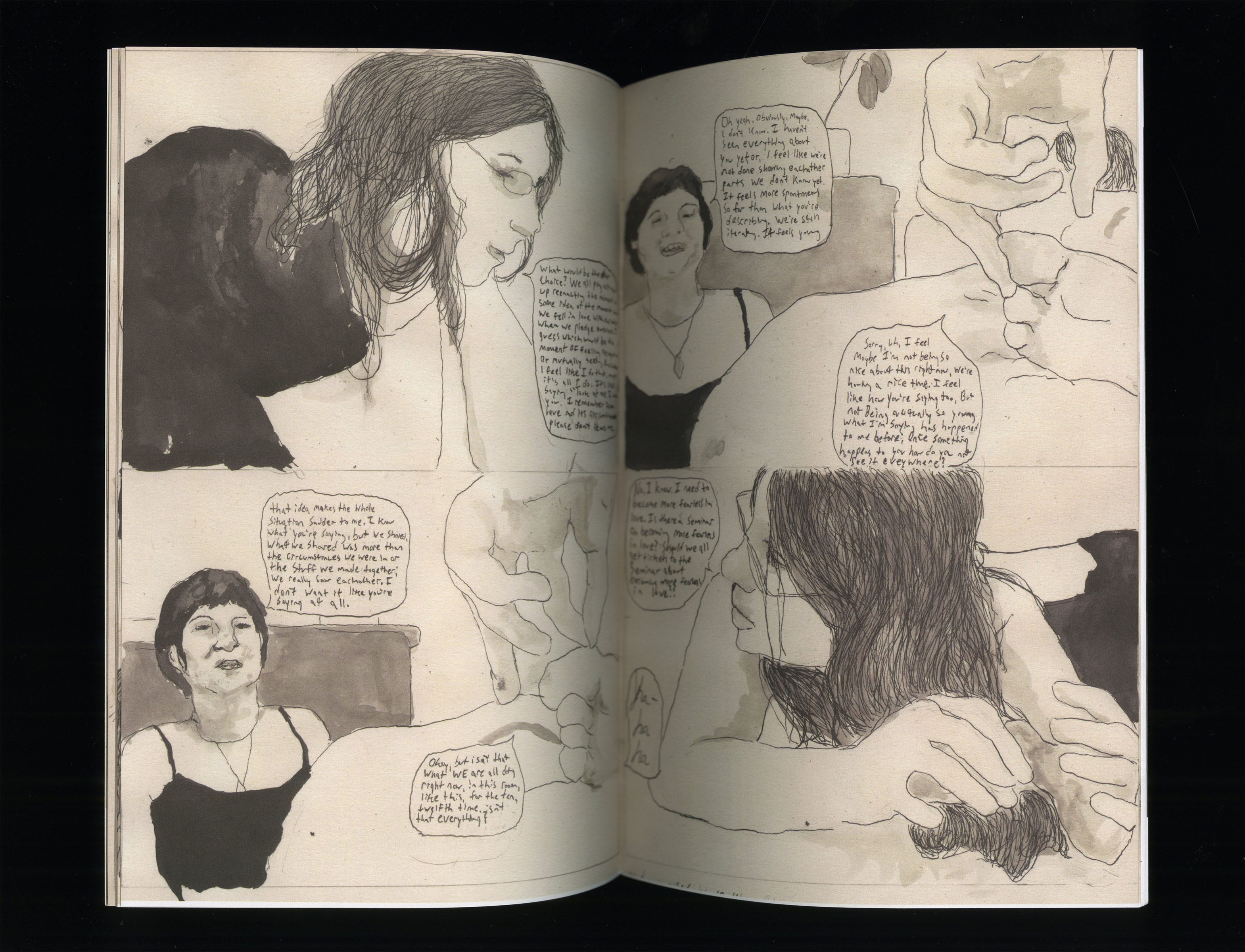


This is SIDE B of a conversation between Katie Lane and Jason Overby. It wrapped earlier in the year. Katie Lane is the artist and author behind the Ignatz nominated Girls Gone Wild series (2dcloud), author of Rheme (Canton Editions), Single Camera Sitcom (Comics Blogger Books) as well as the co-editor of Altcomics Magazine 7 (2dcloud), and co-editor / publisher of Bernadette Magazine. Jason Overby is a wildly undersung cartoonist, creator of Record, Jessica, Exploding Head Man, and co-creator of the comic forum Co-mix / comets comets (2009-2011).
These artist conversations are part of a series that 2dcloud has commissioned. By signing up to our substack House on Fire you can catch them first. By becoming a paid subscriber you will receive an entire season of comics and books in print each year — somewhere between 5-10 titles — mailed directly to you in one burst.
I again want to thank Jason and Katie for taking part. Please enjoy :)
Jason
Yeah, I’m a huge fan [of Aidan Koch].
Katie
Yeah.
Jason
I think her stuff is amazing. She’s a really cool person also. But yeah, a lot of that stuff happened. I met Sean Christensen. I randomly met Jason Miles through... I think I emailed him or he emailed me or something, I don’t know.
Katie
Yeah.
Jason
And then I made comics for a while, did the cometscomets blog, and then at one point, my wife and I had a kiddo, and then we were gonna have another kiddo, and I had to change my job and get a job where I made more money because, you know, I was supporting the family.
Katie
Yeah.
Jason
My wife didn’t work at the time, and so I just stopped really making comics very much for a while, and I spent some time learning to become a computer programmer, and that’s what I do now as my job. And so for, I don’t know, 2 or 3 years really just didn’t make anything at all. And then in the past 5 or 6 years, I’ve been much more actively making stuff and trying to put stuff out. But I really got out of the loop for a while because I didn’t ever have the habit of, like I grew up earlier than you, never had the habit of reading comics online, and so comics just were incredibly expensive.
Katie
Yeah.
Jason
So I just like didn’t buy very much. And also I just kind of still became a little bit, I don’t know, not as excited about reading comics, even as much as I feel like the mode of expression that’s most comfortable for me creatively or artistically is making comics, but I wasn’t as much into stuff that was coming out and wasn’t aware of a lot of stuff until more recently when I started making zines again and going into Floating World and meeting up with people and things like that.
Katie
Yeah, I mean, I think it’s, I don’t know, you know, it’s like one of those, I mean, I’ve been dealing with, a thing. I mean, you know, it’s like I’m not I’m probably never gonna have children. So, like, I mean, and I’m not even saying that surreptitiously,
Jason
Right.
Katie
just it would be it would actually just be extremely difficult for me to have children.
Jason
Right.
Katie
Not that, I mean, it’s difficult for everyone, but there’s just no situation where I could accidentally have a child. It would have to be extremely premeditated,
Jason
Totally.
Katie
costly financially, you know?
Jason
Yeah.
Katie
And so it’s something that’s really hard for me to count on. But there are points in my life, points of, you know, comics, comics is kind of painful,
Jason
Yeah.
Katie
you know,
Jason
Yeah.
Katie
as like a thing, because it isn’t, it’s so small.
Jason
Yeah.
Katie
And so it’s, I think it’s so easy to feel alienated,
Jason
Totally.
Katie
or something, you know, the alienation really just like creeps up very fast.
Jason
Yeah.
Katie
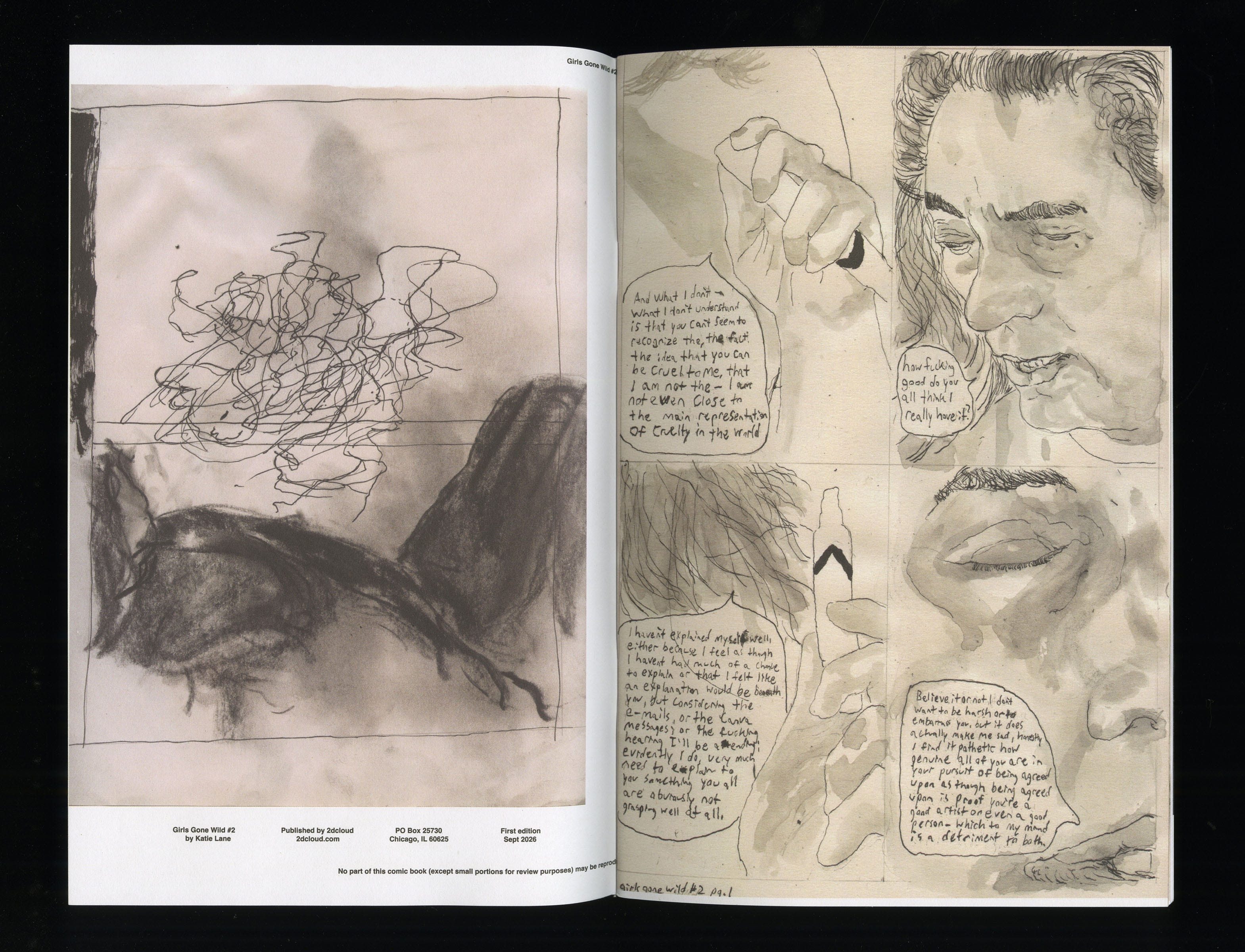
And especially, I mean, you know, like I feel like I made like a huge mistake at a certain, at the early point of my, being in comics or being around comics, which is that I approached it, like critically, public, very publicly.
Jason
Right. Yeah.
Katie
And, it’s not, it’s just kind of, it has kind of always given me this feeling of not even just, like, reputationally. It’s also just like some part of my knee-jerk impulse when approaching a comic is to assess it.
Jason
Uh-huh.
Katie
And I don’t really know that that is like actually the best methodology for protecting your own interest in comics or something like that because, for me, what it’s turned into is it’s like, oh, I guess, like, you know, I’m just, you know, I’m just like an, I just have to be self-reflexive about being an asshole or something,
Jason
Right.
Katie
you know,
Jason
Yeah.
Katie
which isn’t fun for anyone, actually. So I can, I don’t know, there’s like a way of, or that’s the experience that I’ve, that I’ve been working through, you know, over the past year and a half or something.
Jason
Yeah, that resonates with me a lot. I definitely, and Jason Miles and I were talking about this the other day, how I don’t make music, but I listen to a lot of music. I can listen to music and definitely be critical, but I can totally just appreciate it. I can appreciate it in almost the exact same way that I did when I was a kid, and, you know, listening to whatever, it doesn’t even matter.
Katie
It’s magic, you know,
Jason
Exactly. It just moves me. And with books, similarly, it’s like I can read a book and just enjoy it, same with movies, same with TV. Comics are not that way. With comics, I am very critical. It’s hard for me not to think of a comic as how it exists in the history of comics or who this person is or, you know, all of those things…
Katie
Yeah.
Jason
And similarly, I had the cometscomets blog with Blaise, and I feel like I was, you know, it was relatively spicy, like part of it was being,
Katie
No, I know. Yeah, yeah.
Jason
Yeah.
Katie
You guys were, you guys were stirring shit, basically, a little bit.
Jason
Part of the reason to even do it was kind of to stir shit, and so then both of us, maybe Blaise to a greater degree, got somewhat of a reputation for being shit stirrers, and it makes the whole thing kind of weird. And, you know, there are definitely people and companies putting out cool stuff, but I feel like my relationship with comic as an industry is somewhat sullied.
Katie
Yeah, I have always had this feeling that a good critique is like the point of art.
Jason
Right. Yeah.
Katie
Right? It’s part of the circle of the artistic processes, having an ecosystem where,
Jason
Yeah.
Katie
we openly speak about stylistically what’s happening among us.
Jason
Right.
Katie
And I think comics is actually particularly bad at that, sometimes because there isn’t much of a ability to be like, this is what’s going on right now.
Jason
Hmm, yeah.
Katie
And I guess I don’t mean like literally specifically saying that, but like having a critical ecosystem
Jason
Right.
Katie
where that is being demonstrated, you know, through like positive and negative assessments of work or historical attribution about the work, you know?
Jason
Yeah.
Katie
Comics is like strangely this very ahistorical space because of this, and so there’s just like this strange amnesia. About the medium or something.
Jason
Yeah.
Katie
And, yeah, it’s a very bizarre art, like place that people make art in or something. But I actually don’t think it’s actually worth it to do what I’m saying I wish existed. You know what I mean?
Jason
Right.
Katie
I don’t think it’s, it’s certainly reputationally not worth it.
Jason
Sure.
Katie
And it’s certainly financially not worth it.
Jason
No.
Katie
You know, that’s kind of part of the whole. There’s just not enough money in it.
Jason
No.
Katie
So criticism just seems kind of useless or it actually just seems rude.
Jason
Yeah, yeah.
Katie
It’s like I made this for no money in my room and the best I can get is, you know, a bunch of people on the internet talking about it or maybe making like $3000 at a trade show.
Jason
Totally.
Katie
And it’s like, that’s the peak, that’s the height, that’s the highest level
Jason
Yeah.
Katie
that you could possibly be operating at. It is rude to publish something that is like slamming someone.
Jason
Totally.
Katie
There’s just not enough power to knock someone off a pedestal.
Jason
Yeah, that makes a lot of sense. I agree. I think the hardest part... So, yeah, if you were to go into music, you could be relatively unknown and make a little bit of money at music in some form, even if it’s really hard. It’s not like it’s not hard. And the same thing with writing or a lot of other media, you can do it in a way that is, I don’t know, remunerative enough to exist in that space.
Katie
Yeah.
Jason
And then, because of that, there develops around it this sort of critical infrastructure, And I think one thing that is sad for me is that that did exist, that was true in comics, you know, through the 90s for sure,
Katie
Yeah.
Jason
and people didn’t, they weren’t making a crazy amount of money, but you could make somewhat of a living, and there were enough, like, The Comics Journal existed in a different form that felt more important, and more like a locus of thought and was just like the center of what people would be thinking about and talking about, and there was The Comics Journal message board. There was, not cometscomets, but there was comicscomics, which was like the PictureBox message board or blog, in the early 2000s, and it felt closer to what you’re talking about. And then for one reason or another, and part of it is probably just the internet, that doesn’t really exist in in any form, well, anymore. The Comics Journal still exists, but it feels maybe more academic or it just doesn’t feel as crucial to understanding what’s happening and nothing, but nothing does. And so there’s no place that you can go and look at what’s happening and nobody’s really like, I don’t know... I’ve written reviews before, and it’s incredibly enjoyable to do that. It’s really, really fun, but it takes a lot of time. And for me, if I have to make comics and write reviews, and I have a day job that’s 40 hours a week, and I have a wife and two kids, I just
Katie
Yeah.
Jason
don’t have time to do all that. And so I’m gonna make comics instead of writing about comics. And I don’t even know if I were to write things about comics, would I write it on a Substack? There, it would have to be a central space instead of this more diasporic, you know, everybody kind of doing their own thing, because it doesn’t build up into anything.
Katie
Yeah. Well, and I think what’s funny about that is then, it’s like a fanzine culture again,
Jason
Totally.
Katie
which is how it all started, you know, which I think is super interesting.
Jason
Yeah.
Katie
You know, where the comics “industry”, you know, has a certain legitimacy to it because it’s in bookstores,
Jason
Totally.
Katie
which it didn’t necessarily have in America in the 60s or in the 50s or something,
Jason
Even in the 90s.
Katie
or in the 90s. But then there became a fanzine culture around that, and then that’s how we get like fairs
Jason
Yeah.
Katie
and the notion of a cartoonist who’s also like an artist,
Jason
Yeah.
Katie
and not just like in the conventionally remunerated since like a syndicated strip artist or something like that.
Jason
Totally.
Katie
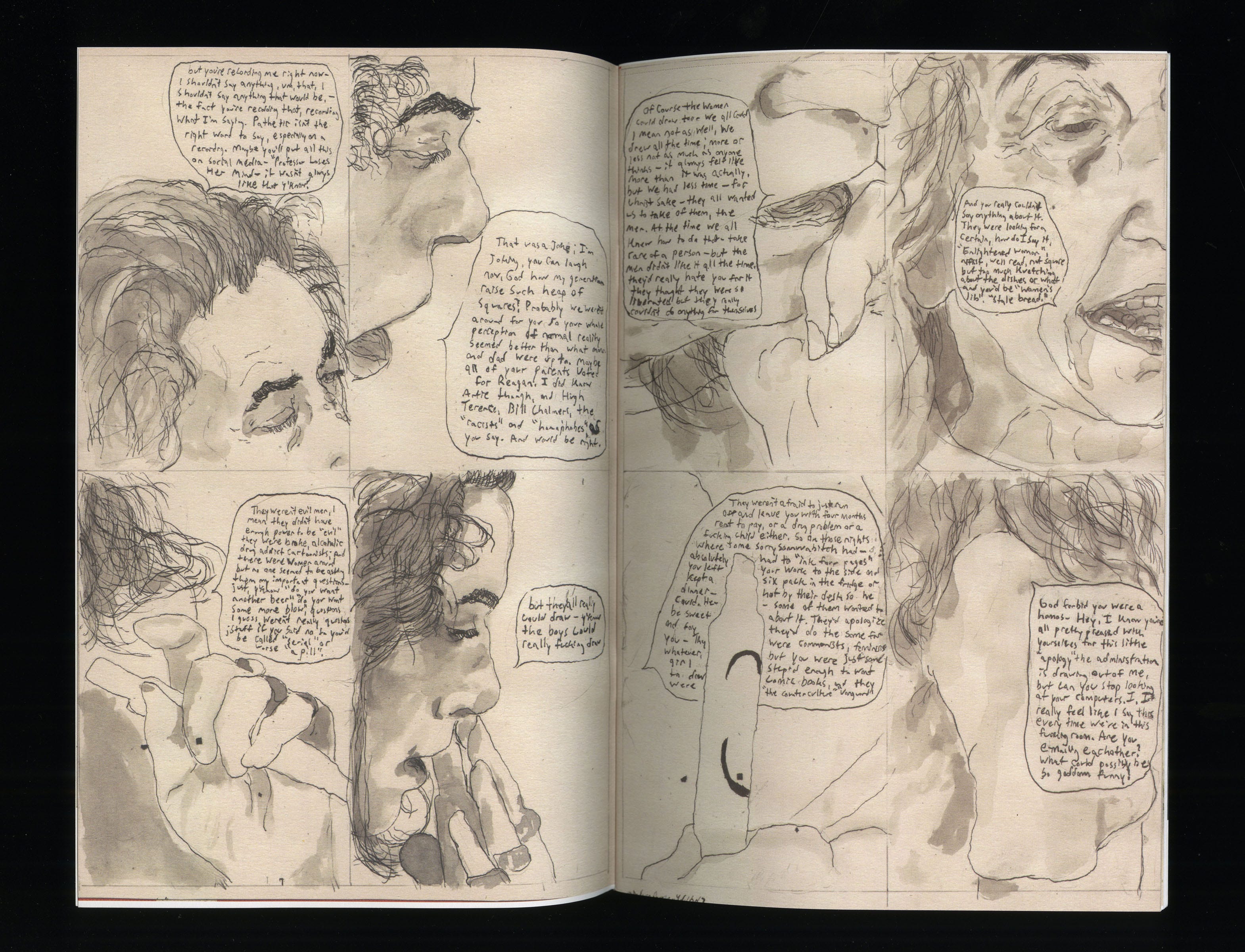
And then the illustration culture is another big part of it where it’s actually so hard to be an illustrator now.
Jason
Yeah.
Katie
I don’t know, I had this like moment, you know the cartoonist Michael Kupperman?
Jason
Yeah.
Katie
Yeah, so Michael, I was at a party at Gabrielle Bell’s house and I was in this room, it was just like we were in this separate room and it was me and Michael Kupperman and two other people, and he was just like sitting there explaining to us that like you could live off some Playboy illustrations. And we were just like, damn, what the fuck are we doing?
Jason
Sure.
Katie
You know, it was like, ‘cause we all have jobs, you know, there’s no way to, like, we don’t make any money off of this,
Jason
Right.
Katie
really at all, and so there is this kind of, constant energy budgeting that happens with making comics or interacting with the broader sphere of comics, even going to a fair or something. Sometimes it’s like, damn, the best thing that could happen to me at this fair is that I would make enough money to pay for my plane ticket.
Jason
Totally.
Katie
And that’s not good. That’s not good for the image making culture, to be honest. I mean, it doesn’t make anyone scrappier. It makes everyone a little bit more
Jason
More conservative?
Katie
Yeah, a little bit more like, and so then professionalization seems like this really big like dragon that seems that we kind of are maybe chasing or there’s this feeling of auditioning
Jason
Right.
Katie
for like a larger thing that maybe never happens or,
Jason
But it’s negative, though, because the thing, you know, when I was growing up, comics really didn’t have any respectability and there were things, things started to get into bookstores in the 80s and there was Maus or there was, you know, Frank Miller or Alan Moore or something like that. But it wasn’t until all these kind of like more mainstream YA-type comics that it, there is more of a professional avenue, but it’s just terrible. Like none of that stuff is good. And so it’s just it’s kind of weird. It feels, it feels different. And for me, I want to like the kind of fanzine aspect of it, but it almost kind of just depresses me in the sense that I feel like when I go to comic shows, it’s more about community than it is about the end result being something that’s amazing. And maybe that’s also just my problem with what we were talking about before with just being overly critical of work and not being able to see it just for itself and not think of it in the context of everything else. There was this term in, I don’t know if it was in the 90s or early 2000s called “Team Comics”. It was about being positive, not saying anything bad about anyone’s work
Katie
Was this a derisive term or...
Jason
Yeah, totally. On the one hand, I completely agree with you that it is the shittiest thing to trash talk somebody who’s spent - they’re just doing this thing for no money. They’re only doing it because they enjoy it and for their love of this craft or whatever. But on the other hand, I want to have enough comics to where I could randomly buy comics in the same way that I would get an album or a novel, that there was enough stuff or even an order of magnitude or two less stuff
Katie
Yeah.
Jason
that I could do that and be really, really excited about it. And I feel like sometimes the community aspect of comics gets in the way, because then it’s all just positive, and like you, you do want to support your friends or whatever, but I don’t know what the solution is.
Katie
I mean, I’m fully in it, you know, in this way that is like, I’m at the earlier parts of my life of making comics or something.
Jason
Right.
Katie
At least I like to consider it that way. I mean, I’ve been making comics for like eight years now
Jason
Right.
Katie
so it’s like not really like that. I’m at a strange point.
Jason
You’re not bitter yet. Ha ha.
Katie
Well, I am, you know, that’s kind of the problem is that I do get quite bitter and then that that bitterness is prohibitive, you know, I’m always kind of lying on my back in my bed and staring at the ceiling and being like, what the fuck am I doing?
Jason
Totally.
Katie
I talk to my therapist about it. It’s like a big part of my, like, system. I mean, I’m definitely a depressive person.
Jason
Yeah.
Katie
And so that part of it is really connected with feelings of failure and despair or feelings of, not anger at the world necessarily, but, like, why am I in this position where this is the way I know how to express myself?
Jason
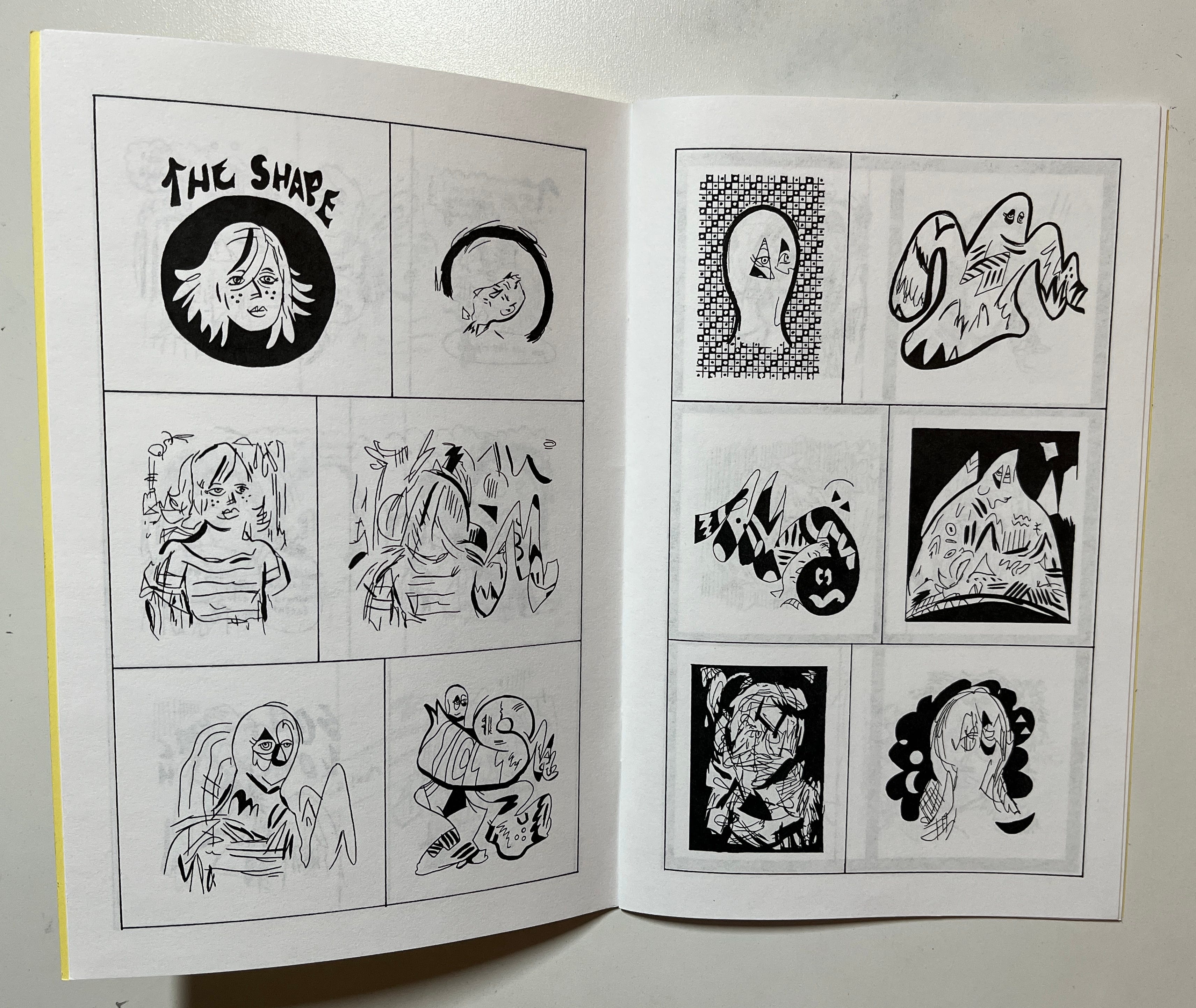
I feel the exact same way. So many times I wish that I had focused on music when I was younger. My roommate in college was in a band, tons of my friends were, but I never wanted to spend the time to learn an instrument, and I just didn’t commit to it in any way. And I’m like, why didn’t I choose music, or a few, maybe a couple of years ago, I started like trying to write a novel, and I did enjoy it, but it’s not the same experience as making comics, and it bums me out because there’s the tiniest audience for comics, and it should be the same as anything else, but, and maybe it’s because it’s so hard to make them that, like, the barrier for entry just to make a comic is relatively difficult. I don’t know what it is, but it’s just a bummer that it’s not different than it is.
Katie
I mean for sure. I think I, and you know, because it’s so much thought goes into the thing for me.
Jason
Yeah. Yeah.
Katie
And I think, and for most people, I mean, because it takes so much time, it has to be considered, and it has to be composed in a very specific form. And I spend most of my time thinking about that aspect of it, even more than I think about, you know, I mean, I obviously think about the, I mean, I write narrative comics. So it’s like I do think about like the narrative of the thing. But that to me is like a few layers behind the image-making process.
Jason
Yeah.
Katie
And then I get frustrated about like, well, what am I doing here? Like what’s the point or something like that?
Jason
Totally.
Katie
But I mean, you know, on the bright side, I do feel like I’ve been pretty lucky in terms of just, I feel like people respond to the work, and a lot of people who respond to the work are not cartoonists,
Jason
Totally. Yeah.
Katie
which is like important for me. You know, because I think that my imagination of what is like possible on a comic is that it isn’t actually just for people who like comics.
Jason
I feel the exact same way. I think that’s the place that - I think in the 90s, there was more of a connection between comics and, maybe, the music world and maybe even the literary or the art world. But yeah, there’s less of that, of bringing in a broader set of viewpoints and different types of people. I think one thing that I appreciate about your comics and looking at things by some of the people you’ve mentioned is that the way, the mode of image-making is less associated with the way that people made comics, have made comics for, you know, a hundred plus years, which is like using Bristol board, and a particular type of ink and maybe a dip pin or a Winsor Newton series 7 sable brush,
Katie
Yeah.
Jason
Rapidographs, all of those things that are very, they’re not necessary to make images
Katie
Yeah.
Jason
and texts that operate together. You can use anything, but I feel, and because probably, I grew up with a certain type of comics, and also when I started making comics, I didn’t know anything other than using those tools, and there weren’t a lot of examples of people like Aidan who would use pencil and
Katie
Yeah.
Jason
things like paint or gouache or colored pencils or whatever. But when I see the stuff that you do, whether it’s collage, that completely feels off the rails compared with what most people think of as comics or the way that you make images that feels a little more handmade. It doesn’t seem like you’re striving to create this product, which is like the comic book. You know what I mean?
Katie
Yeah.
Jason
And I think that that is really, that’s what we need. We need people having the permission to make things like that where they don’t need to have any idea what the “correct” tools are. They have whatever paper they have, whatever things they use to make images, and that’s what they do.
Katie
Yeah, I mean, you know, ironically enough, I mean, I do use like a crowquill and a brush.
Jason
Oh, you do?
Katie
I use a crowquill. I use a brush.
Jason
I guess it makes sense, but you do it in a way that’s not as, it seems sketchier. You know what I mean?
Katie
Yeah. It is.
Jason
It doesn’t seem, I don’t know - it’s like it could easily be a ballpoint pen and it would be similar, you know what I mean?
Katie
Yeah.
Jason
Obviously you can’t get the same kind of variation in line weight and that kind of thing and, I don’t know, but your stuff looks, it doesn’t look like comics illustration. In a good way.
Katie
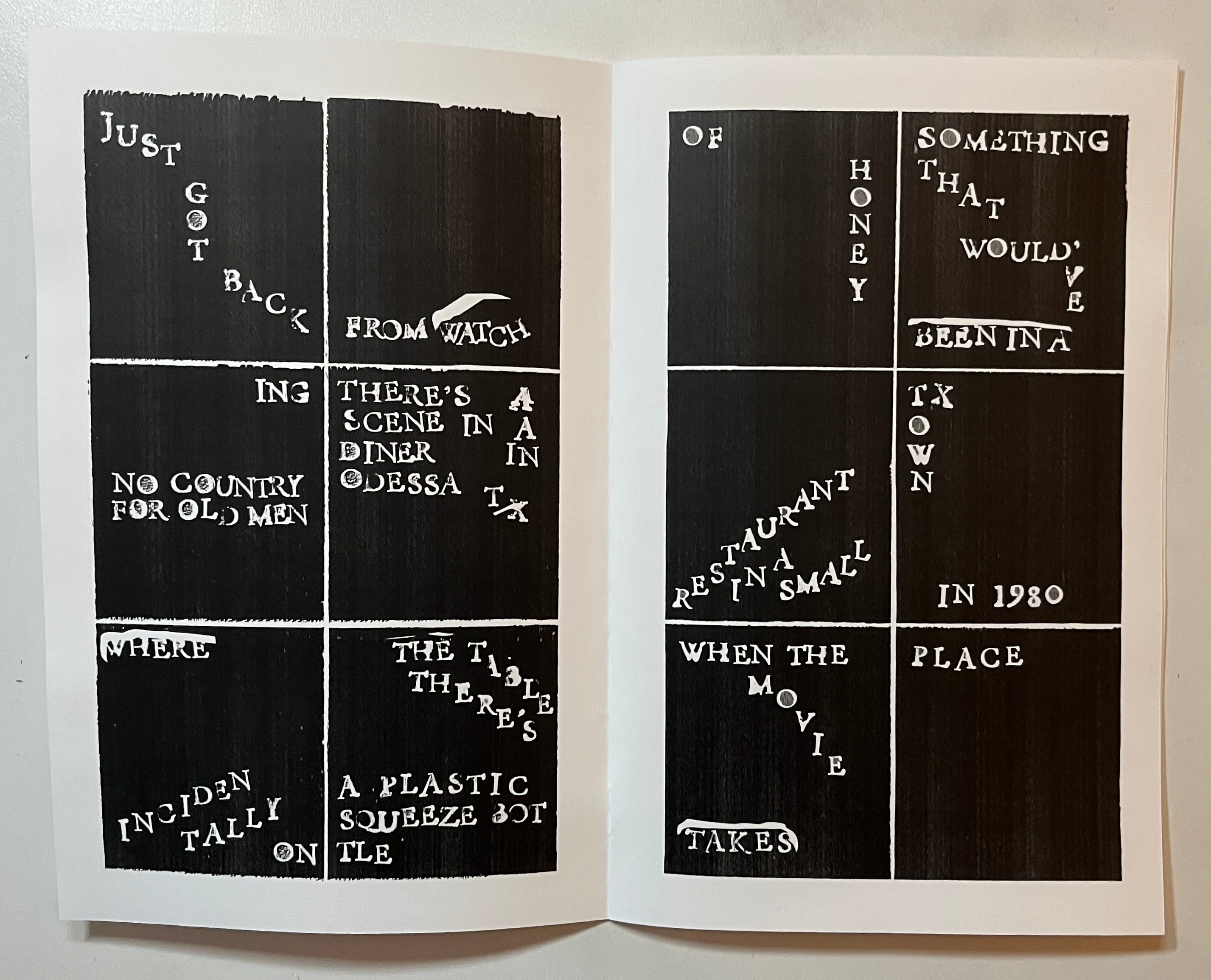
No - yeah. And yeah, I mean, and that is kind of precisely the point. I mean, I think one of the things about the crowquill specifically is that - I guess I think a lot about the very widely circulated and apocryphal story about Gary Panter’s Rapidograph usage.
Jason
I don’t know that story. What is the story?
Katie
Oh, he just, people ask him, “Well, how do you get that line? Like that squiggly line”, that kind or schizo, shaky line,
Jason
Ratty line is what he says.
Katie
Yeah, and his his answer is, “Well, they were kind of expensive, and they would get gunked up
Jason
Mm-hmm.
Katie
and they would break, and like they would just decay, and I would just keep using them. And so I’m using kind of like broken tools. And so it actually looks like that because the thing is fucked up a little bit.”
Jason
That’s funny.
Katie
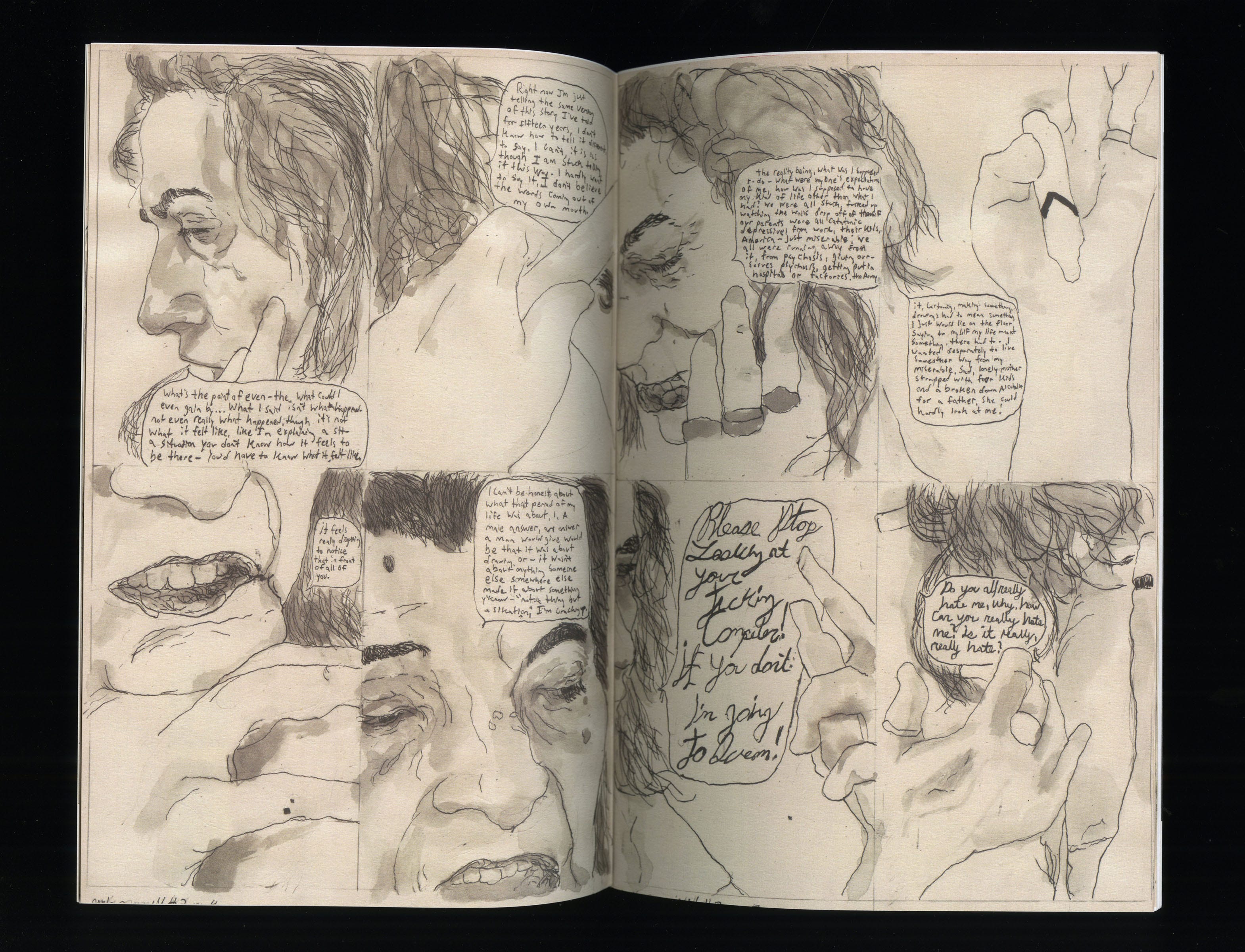
I think about that all the time, and I feel that way about the way that I use a crowquill is probably not correct.
Jason
Sure, sure.
Katie
In this way, that it’s not, because the point, right, is that you have different line weights, but you’re supposed to be able to control deployment of the different line weights.
Jason
Right, right.
Katie
And I can’t really. So the line comes out extremely expressive
Jason
Right.
Katie
because it’s just simply my lack of control over my hand.
Jason
Right, right. Immediacy.
Katie
But it gives it something that is just capable with intention.
Jason
Totally.
Katie
so it’s almost like an abstractionist perspective to it. And I lean into that. And I also, it’s like stuff like paper texture is really important to me. I use a lot of different kinds of paper for different things, and I never level it out in Photoshop because I think one of the things that’s happened in comics image-making is that the consistency of line that people use and coupled with the digital leveling out of the of the blacks on the paper just make it look like it was made on a computer, even if it wasn’t made on a computer. And so you get these drawings that are like, people who would even be like, “I never will draw on a computer,” like it’s so important to me to have this, you know, physical practice or something like that, but it never shows up. It doesn’t show up in the work
Jason
Totally.
Katie
or it’s not evident in the work.
Jason
Because the reason sometimes that people are against using a computer isn’t because - it’s more because of the virtuosity of drawing with a brush
Katie
Yeah.
Jason
or something where it’s difficult in the way that, like, playing guitar solo is difficult, versus any inherent difference between the line on the computer and the line that they’re making by hand. Whereas, the stuff that you’re doing looks like it was made by hand. It looks like there’s
Katie
Yeah.
Jason
less of a remove from the process, there’s more of a vestige of the process, or, I don’t know, revealing the process, or not trying to hide it. Whereas, most of the comics that I’ve released have been zines that I make myself, and I don’t have necessarily the ability to print in grayscale or whatever.
Katie
Yeah.
Jason
And so using that sort of thresholded, essentially binary, black and white way of making images and getting them ready in Photoshop is a way to work within those limitations of printing. But I feel like I should operate differently because seeing the stuff that you’re doing, and there are a lot of folks too... Blaise feels similar... It feels really exciting because it’s less beholden to this history in a way that feels dead, you know?
Katie
Yeah, and I mean, I feel relatively informed of comics history in this specific way, just because of the way that I grew up, and the availability of the internet, in terms of just like, you know, I have the ability to read every issue of like American Splendor or something like that, which people didn’t have.
Jason
Totally. When I was growing up, I had to find the issues.
Katie
And so you really just get the greatest hits when you buy the book or something. You get the Crumb stuff and the Collier stuff, the stuff that’s the lauded stuff, but there’s a lot of rough... I mean, I’m just using this as an example. There’s a lot of rough drawings in some of those, but those guys are amazing.
Jason
Yeah.
Katie
You know, like Gerry Shamray is amazing, you know, Greg Budget or whatever that guy’s name is is amazing.
Jason
Yeah, or Frank Stack.
Katie
Frank Stack is amazing. You know, there’s just so much. There’s so much that the book market actually irons out of history.
Jason
Totally. Yeah, that’s a great point.
Katie
And that’s the image-making culture that you get when you like omit anything that’s idiosyncratic or like in those underground anthologies there are so many cartoonists, who made like two comics, or four comics, or
Jason
Yeah.
Katie
something like that. So they’re never going to get a retrospective. People don’t know who they are.
Jason
Yeah.
Katie
Their names might not even be actually published.
Jason
Totally. Yeah.
Katie
You know? So there is this alternate history of comics that gets kind of like, for me becomes extremely important
Jason
Yeah.
Katie
to live with and instead of just... I don’t, I don’t really know anything about illustration is also the thing. And I think a lot of the people who make comics at a very high level, like now that are my age, that are in my peer group, are people who majored in illustration in college. Or some of them went to grad school for comics,
Jason
SVA.
Katie
and they were instructed by people who are like, and this isn’t even a bad thing - it’s a good thing. Because they have deep image-making practices that come from like Matthew Thurber was their professor or something like that. Or Gary Panter was their professor, CF was their professor or something like that. And there is an interesting thing happening with the institutionalization of comics where the people that I really admire are kind of directly actually teaching some people.
Jason
Yeah. Yeah,
Katie
Which is a nice possibility in my head.
Jason
Do you think that’s good then?
Katie
I think it’s good, but I do think that there is a level of illustration work in comics that can be, to me, restrictive.
Jason
Yeah, yeah.
Katie
And it comes a lot from the presence of animation as a thing that a lot of people my age cared a lot about when they were younger, because there were a lot of these shows that had, like Michael DeForge working on Adventure Time or
Jason
Adventure Time is a classic example.
Katie
Or even like, there’s a really weird relationship to this television program, but like the Steven Universe
Jason
Oh, yeah, my kids love Steven Universe so much.
Katie
thing where I could go to college, I could get a degree in illustration or animation, and then I could actually get a job drawing. And that was a thing that a lot of people actually thought they could do.
Jason
Yeah.
Katie
Because they told them that they could do that. And they, and then it, I think for most of them that are my age, it became immediately apparent that only like one percent, it’s like the NFL or something like that. You thought that you were just signing up to have a legitimate career path that isn’t so exclusive that it’s like a dream job. And now it’s strange how these kind of like aborted career prospects become native to the comics-making culture or something like that.
Jason
Yeah, that’s really true. I hadn’t thought about that, but yeah, you’re right. Whereas, you know, if you were in that one percent, you could have a job making some amount of money, but it is really difficult to do that.
Katie
And it’s also, I mean, I live in New York too. So it is like kind of one of those situations where like every job sucks here.
Jason
Totally. No matter what, you’re not gonna have enough money.
Katie
Even the worst job in New York is like, and I mean like the worst best job, like if you’re like a barista or bookstore clerk or something like that, it’s like your boss really does expect you to be the best employee in the entire world.
Jason
Yeah, yeah. Totally.
Katie
It is like a culture of people breathing down your fucking neck. And so, yeah, it produces extremely weird attitudes about this thing that is, I guess, not a job.
Jason
Yeah, yeah. This thing that’s a hobby. I work on comics almost every day. It’s very rare that a day would go by where I wouldn’t spend some time working on it, but it’s still totally just a hobby. It’s never something that I expect to make any money at. And that’s a bummer. It’s just a bummer that there aren’t, I mean, there are some examples, surely Dan Clowes... I mean, and sure he also has made movies, Charles Burns, there are people who probably make enough money primarily from comics to live, but, again, you could probably count them on your fingers or maybe your fingers and toes, but there really aren’t very many of them who make the kind of stuff that we would be interested in. I mean, surely there are people who work at Dark Horse or Marvel or DC who make middle class incomes or whatever, but that feels like a different type of thing to me.
Katie
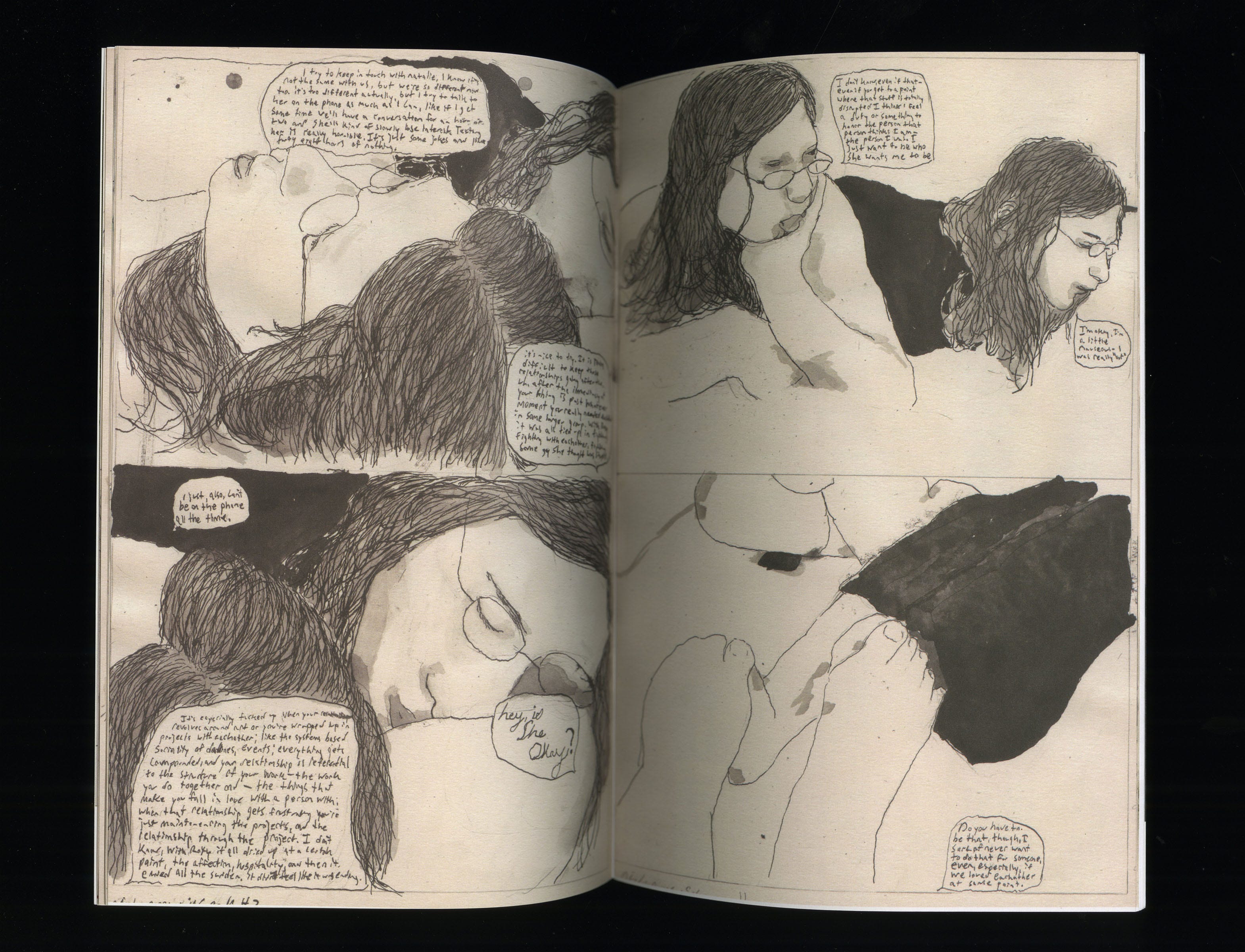
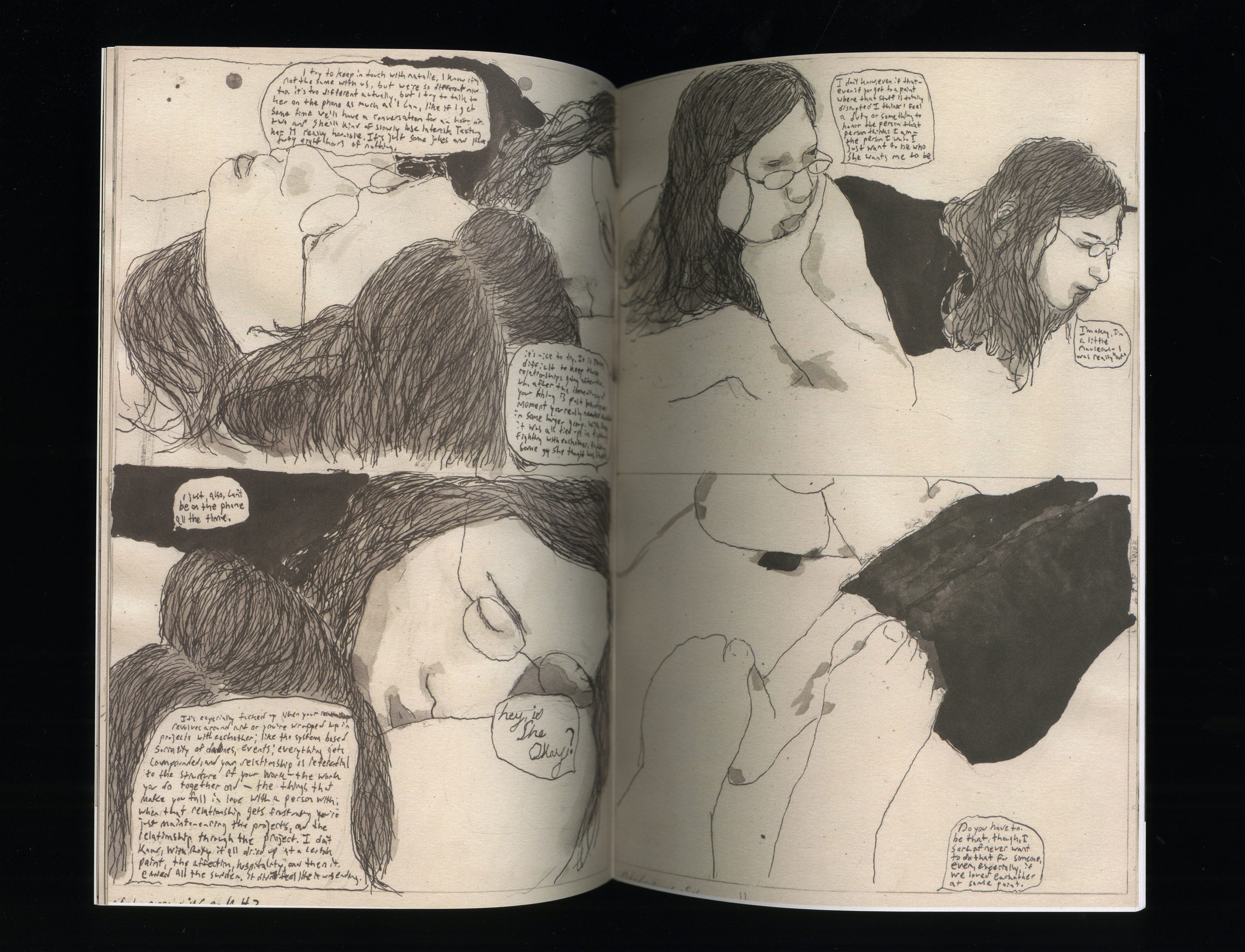
No, I mean, it certainly is. I think that, something really bizarre that I’ve kind of happened on recently in my - I don’t know if you’ve seen, because I don’t know if I sent it to you, but the comic that I did for 2dcloud. Did you see that?
Jason
Yeah.
Katie
Okay, that comic, I get a lot of stuff from alternative comics, that’s my primary influence, as I’m drawing it sometimes, this way of depicting full-figure bodies is like a superhero comic fetish
Jason
Totally.
Katie
or something like that, that I didn’t even really realize until I was halfway done with the second issue where I was like, this is how I would draw a Superman comic. There’d be more panels, but it would be, but it’s not graphic, it’s not flattened.
Jason
Right.
Katie
And that work is very like, you know, they’re just drawing human figures, those guys for better or for worse, you know? Those guys are pretty good at drawing anatomy, and
Jason
Totally.
Katie
if they’re not, and if they’re not so on every single panel, it’s because they’re drawing seven issues a year, which is an outrageous amount of drawing that I don’t think any, you know, no alternative cartoonists can actually relate to.
Jason
No.
Katie
But yeah, I don’t know, I do wax a little poetic about what it would have been like to maybe make some money drawing or something.
Jason
Yeah.
Katie
But I don’t know what that’s like.
Jason
I don’t either. I went to art school, and UT at the time was really theory-based, you know, it was conceptual. This is in the 90s and not at all geared toward illustration or anything like that. And so I did have a lot of life drawing, and that was super helpful in beating in a sort of gestural approach and just more experience or whatever. So I did have a lot of that, but mostly it was just exposing me to lots of other types of art, performance art or conceptual art or whatever
Katie
Yeah.
Jason
that I would not have interacted with otherwise. I would have been very suspicious of and maybe still am, but not nearly as suspicious - I’m way more open to things than I would have been had I not gone to an art school that was like that. And then, yeah, I was like, I’m not going to get a job where I do illustration or where I even possibly would make money from comics or from drawing. I wanted to keep it this pure thing, and I didn’t, I don’t know, I’ve tried on purpose not to learn principles of design or anything that could make me more professional.
Katie
Yeah.
Jason
Because I don’t want to do it the way that I’m supposed to do it. I want to do things, just whatever random way, and that might be a bad thing to do, but I don’t know, I just feel like it’s, I think the negative of what you’re talking about before, like, if I could have had Gary Panter as my teacher, fucking CF as my teacher, that would have been incredible to me when I was in college. But it also would have narrowed me even further than I’m already narrowed from just the influences that I have.
Katie
Yeah, I think that’s a good point. I feel like part of what I like about myself as an artist is that similarly I, kind of in a weird way, don’t know how to do things,
Jason
Exactly.
Katie
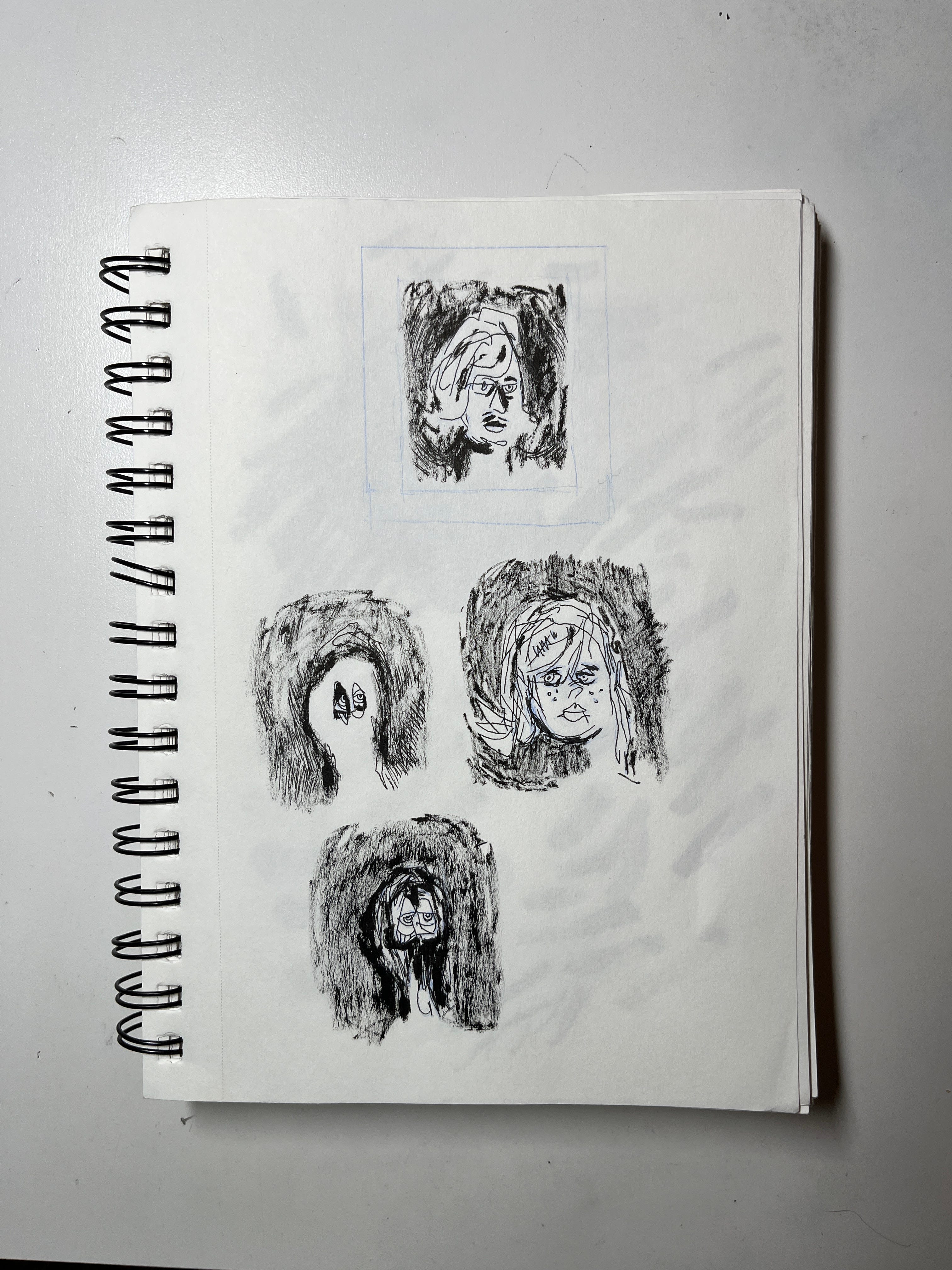
and my not knowing how to do them produces more interesting results than if I - I kind of really relate to this because like I had like this genuine, specifically when I was making this collage comic, I had such a chip on my shoulder because I thought what I was making was really, really special. Which is like such a stupid feeling to have about something that you’re making. You know, you’re like, I’m making something, I know this is it, or something like that, and you become, and you have to think that way,
Jason
Oh, yeah. Absolutely.
Katie
you have to become, you have to be dedicated to it.
Jason
Yeah.
Katie
I made that comic for four and a half years, I really spent my life on that. But I had this crazy recalcitrance about drawing specifically, I was like, I never want to learn how to draw.
Jason
Totally.
Katie
Because I was like, oh, if I learned how to draw, then I will just start doing this thing where my comics are about, like, look how good I can draw or something.
Jason
Exactly, just virtuosity.
Katie
just like this person really can draw, you know?
Jason
Right.
Katie
That was a reaction. I wanted to take away from. But as I do it more, and my life gets more wrapped up in it and it’s less of a thing I’m doing by myself, and I’m hanging out with people that I admire a lot, like Angela Fanche, like Max Burlingame, they’re kind of my best friends. We hang out multiple times a week and stuff like that, and they are so good at drawing.
Jason
Yeah.
Katie
And it’s so beautiful to watch them make something.
Jason
Yeah.
Katie
And that virtuosity makes sense to me. And then it works backwards. I’ll be reading a comic and for the first time in my life, I can just kind of look at a comic and be like, yeah, this, this guy can really draw.
Jason
Yeah.
Katie
It’s crazy, I was reading Click, the Milo Manara comic I got on eBay, and I was like, Jesus Christ, the faces
Jason
He can fucking draw.
Katie
in this comic are insane. Like, damn, and in this way where I’m like, it’s almost like magic again or something.
Jason
Or like Moebius, or even Crumb.
Katie
No, Crumb can really draw.
Jason
yeah, and I totally agree. Sometimes I feel like for myself, part of it is a way to deal with insecurity, to say, “well, I never learned to draw so of course I can’t draw like that.”
Katie
Yeah.
Jason
Drawing is definitely something that gives me a lot of anxiety, and it’s not something that I feel super comfortable or fluid with in the way that, of course, Angela’s drawings are beautiful, or Margot Ferrick, or, you know, Blaise, he can fucking draw.
Katie
Yeah, Blaise. Yeah, he can really draw. He chooses not to sometimes, and I admire that about him too.
Jason
Sure, he shows restraint, and it’s definitely like there’s intention behind what he’s doing. But, learning to draw actually does facilitate communication, and you getting across whatever point you want to get across, and even when I think about what is some of the appeal of comics, some of the appeal really is that a drawing looks fucking cool, and it can be that it’s nicely drawn. It also can be that it’s just a rad pattern or, you know, it could be, there are lots of things that equate to “fucking cool”, but some of it really is, just technical facility with drawing can be awesome.
Katie
Yeah, and it can totally take you, it just can really take you somewhere,
Jason
Yes.
Katie
and really make you, but, and I think it’s just so deep, you know? Part of learning to draw for me, which is very much still ongoing, I think about drawing as something I’m trying to get better at, constantly. I’m in a drawing class,
Jason
That’s rad. I would love to do that.
Katie
and I position myself as a student in some ways. But, you know, getting more intimate about what makes people’s drawings good I think really opens you up, and it makes - even really technically good drawing can be super boring or something where it’s almost like a, there’s like a weird curve to it, or there are points in someone like Adrian Tomine’s career where I’m like, that are his best drawings, but they’re behind him
Jason
Yeah.
Katie
in this interesting way because it’s like his drawing almost, maybe it’s too good, or the technical skill is too high.
Jason
Right.
Katie
And so it becomes this strange caricature thing that happens.
Jason
Right, right. Yeah, it’s almost crutch where that’s kind of maybe the thing that is, I don’t know - one thing that’s probably sacrilegious to say, is I feel that way about Jaime Hernandez to some degree where it’s like, I get it. You know what I mean?
Katie
No, well yeah.
Jason
Sometimes it’s just on the level of, okay, cool. And there’s not a whole lot more to it than that for me. That seems like the goal of it in the way that, I don’t know, in the 80s and the 90s there were tons of pinup type artists, and it seems like it operates in a similar way.
Katie
Yeah, self-consciously, I’d say, but yeah for sure.
Jason
Maybe you’re right. Yeah, that’s true. It’s probably definitely more self-consciously than something from the 90s, but it’s still not as exciting to me as it was when I was 15, you know?
Katie
Sure. Yeah. Another big part of my coming to Understand Comics better, and also, I think it’s really funny. Sorry, I’m actually gonna divert that. I really loathe Understanding Comics.
Jason
No, that’s fair. I totally think that’s probably the right attitude, and it’s terribly ugly and whatever.
Katie
No, not even for that reason, I just, I think that he, there’s something about its afterlife that I think is extremely bad.
Jason
I agree.
Katie
I’ve maybe spent my whole time making comics resisting this because it’s almost like it’s saying, “okay, comics is an art form where the rules of fine art are opposite.”
Jason
Yeah. Yeah.
Katie
And instead of subtlety and perspective and the meeting of the subject and the object in the piece of art, instead of those things being the animating force of the medium, the animating force is that they’re completely didactic.
Jason
Totally.
Katie
Visually. And so there’s no room...
Jason
It’s like an instruction manual. Similarly, I really don’t like Chris Ware’s work, for the same reason. Like design-wise, it looks a lot nicer, but the way it operates, it feels completely didactic to me. It feels completely dead. There’s not a lot of life to it.
Katie
Yeah, and I think that is like the ubiquitous opinion or something in a certain sphere of comics. I mean, I don’t think everyone who likes comics actually feels this way. And I think like part of what’s interesting to me about, well, what was interesting to me about this group of people that I was hanging out with, a lot of them moved it back to San Francisco,
Jason
Mm-hmm.
Katie
and the younger people left and the older people stayed or something like that,
Jason
Mm-hmm.
Katie
was that their work was really popular with, the comics people didn’t like, and I guess I’m mainly talking about these, this series of anthologies like Jaywalk magazine and Cowlick magazine and this other anthology called Junction Box. Whereas, a lot of comics people didn’t know how to deal with this work, like on the TCJ Discord universe of extended comics discussion.
Jason
Right.
Katie
But at the same time, it’s like all of the stuff that would be going on would be heavily attended by people who just didn’t know anything about comics.
Jason
Right. Right.
Katie
And they were just friends with these people, which is fine, but there is something interesting about being the exact thing that makes comics people kind of grossed out by something is actually what’s encouraging to people who are just kind of cool and think art is cool, or something like that,
Jason
Yeah.
Katie
like graffiti, or skateboarding, or some shit, and it’s actually more important to me.
Jason
Yeah. Well, and that’s why Fort Thunder was cool when that came out
Katie
Yeah, exactly.
Jason
because it was like, these people are actually interesting artists and they have a really wide, they were very not Understanding Comics and they didn’t go to SCAD. They went to RISD. I would rather read a comic by CF than almost any other comic. And it’s because it’s engaged with comics history, but it also is just this cool thing that’s not operating thinking.
Katie
Yeah.
Jason
And thinking can be part of it, but it’s so intuitive and beautiful.
Katie
Yeah.
Jason
I think something that we lost in the 90s into the aughts with the desire to be respectable.
Katie
Yeah, it’s a trajectory that kind of repeats itself over and over again, you know? I was just reading the Crumb book, I just finished the book that Dan Nadel wrote about Robert Crumb.
Jason
Oh, what did you think about that? I haven’t read it.
Katie
I think it’s interesting. I mean, I think that part of what it is, it’s like one of those things where I was reading a biography and what I actually wanted was more of like a history of the 70s in comics, the 60s in comics.
Jason
Right.
Katie
And so when it starts to get outside of, when it starts to just be about his life after that time...
Jason
Like the Fritz the Cat movie and shit like that.
Katie
Yeah, I mean, there’s a bunch of fun stories in it. But what’s so interesting and animating to me about thinking about that time period of history in comics is that it’s so wrapped up in counterculture,
Jason
Yeah.
Katie
it’s not even really about comics. It’s like about, like, San Francisco as a countercultural hub or the lower East Side as this stew where there are people who are fine artists, poets, downtown musicians who are all around each other.
Jason
Yeah.
Katie
And so comics is just this splintered off culture in and of itself, like a part of the ecosystem of like nonconformism or something.
Jason
It’s like alternative culture is this big thing and comics is a part of that. Whereas now, it’s like comics is comics, and that’s it. And it’s not really related to alternative culture in any way.
Katie
I think like CF is an interesting guy to talk about with this because he’s still like very much a part of New York underground culture in terms of like playing noise shows a lot, he’s always at shows. It’s like the ecosystem of someone’s life is, to me, part of the way that your image-making process comes out, or, obviously, it’s a part of the way that you are, and so it’s a part of the way that you make images. And so if you’re confining yourself to, oh, I just care about comics and the related universe of comics-related things, you’re gonna make kind of bad comics.
Jason
Sure.
Katie
Or comics that maybe will be successful, but that’s not as interesting to me as I think a better way to put it.
Jason
I absolutely agree with you because the cultural reference points are just comics and it’s really insular and recursive. I remember William Gibson, the science fiction author, when he was writing, like, I think probably the first main book that he wrote, Neuromancer, was saying that he wanted to write a book that was like a Bruce Springsteen song or something like that. And at the time science fiction being this kind of like, ghetto, but really rife experimentation and doing really cool stuff, wanting to just have these influences from like Springsteen or punk rock or something like that
Katie
Yeah.
Jason
instead of feeling like those things are distinct. They’re kind of all just a part of this larger thing.
Katie
Yeah.