
This is SIDE B of a conversation between the cartoonists Ash H.G. and Wilfred Santiago. It was conducted over email from the fall of 2024 to the spring of 2025, with some of the imagery arriving into our in-box over the last couple of months.
These artist conversations are part of a series that 2dcloud has commissioned. By signing up to our substack House on Fire you can catch them first. By becoming a paid subscriber you will receive an entire season of comics and books in print each year — somewhere between 5-10 titles — mailed directly to you in one burst.
Last season (19) includes: Nuie by Nuie, East District by Ash H.G., Egirl Magazine 1 ed. Katherine Dee, La Poderosa 1 by Powerpaola, Girls Gone Wild 1 by Katie Lane, Altcomics Magazine 7 ed. Blaise Larmee and Katie Lane, Mirror Mirror 4 ed. Airplane Mode.
Season 20 includes: Sometimes All the Time by Tara Booth, Girls Gone Wild 2 by Katie Lane, La Poderosa 2 by Powerpaola, We Will Raise You! by Junwoo Park, a new comic by Tara Booth, and Mirror Mirror 5 ed. Airplane Mode.
If you missed SIDE A, click the link.
I again want to thank Wilfred and Ash for taking part. Please enjoy :)
Raighne interjects: Hi guys, thinking about this more as a panel at the moment. [I wanted to ask] — how do you write? Do you write a script formally, do character designs, storyboard / thumbnail? I find myself doing any number of things; writing out partial conversations, character descriptions, ideas in notebooks or on the computer. Sketches of some of these ideas on random pieces of paper, sketchbooks. And then usually I end up iterating as I go about it and refining in a kind of editing form.
Do you have tricks for seeing a project or a piece through? Or do you not really have any problem with that? I mean, outside of money. I have a separate source of income (clinical trials) so doing the work is just something I do on the side initially. And for me, completing something - seeing it through - I have to create like a separate ‘engine’ of just like, enjoying and being compelled [enough] to see it [through] to completion. Which can feel kind of mysterious to me at times. Like knowing yourself well enough to know how you tic. A part of it maybe is the sense of discovery.
Wilfred Santiago: Similar to you. I keep notes, ideas, thumbnails etc. pretty much everything that comes to mind in a small Moleskine. Been doing it this way for years.
A long time ago I began using a 3.5×5.5 Moleskine as a way to slim down and focus on the essentials. Because of its small size it forces me to not waste time on unnecessary details. Thumbnails, characters designs, ideas for dialogue, style approach -- it’s all there. Once I flesh out an idea and figure out what kind of story it’s going to be -- is it funny, scary, sexy time or whatever, I work on the story arc. My first question would be how does the story end? Basically, I think of the end first. Then the beginning of the story, I try to come up with a hook, something to grasp the reader’s attention from the get go. Then figure out what happened between point A and B.
To sum up:
1. Do ending.
2. Do beginning.
3. How do we get from point A to point B.
4. Profit.
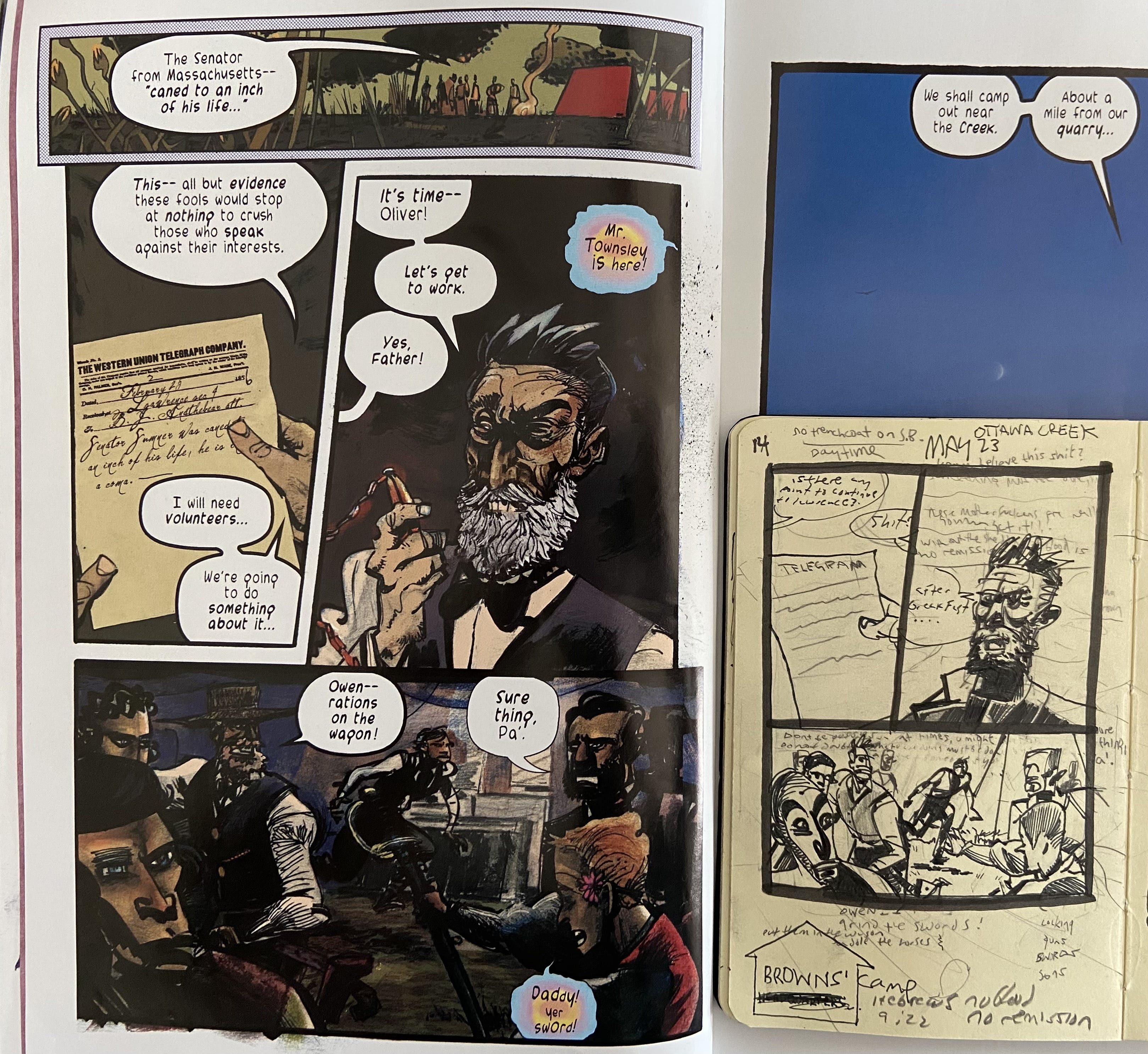
Before the drawing begins, I prep by making a nice little playlist that reflects the mood of the story to listen to while I work on said project. I avoid looking at comics; everything else is game: movies, old school illustrators, whatever helps get in the character’s head and story. Once I soak in all that, I’m ready to sketch the pages and that’s when I write a loose script. Stage directions, panel notes and what not are written on the margins as I go along. This progression is not necessarily linear, It’s not like a wave, it’s more like foam coming to the surface. After a scene is completed, I blow the pages up, trace them onto the paperboard. Then I pencil, ink or paint depending on what it is I’m going for, all the while I tighten up the script. Once the art is finished, it gets scanned. Edits, color, balloons, rewrites, lettering are finished in photoshop until it looks like I know what the fuck I’m doing and it’s ready to print. I mean, it’s all fluid and sometimes things end up being something completely different from how it started or the original intent.
Below: (Finished page from Thunderbolt vs. the sketched version)
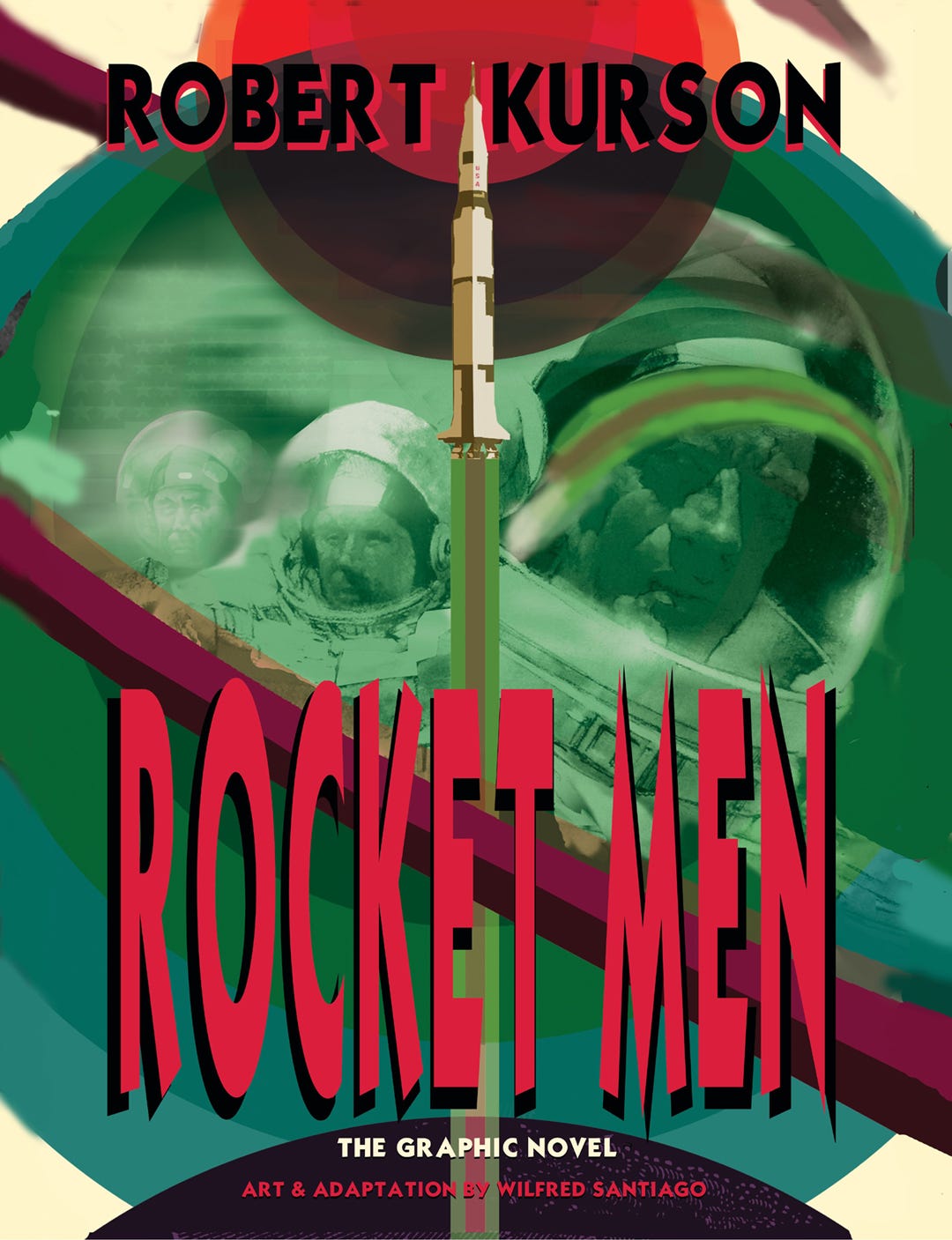
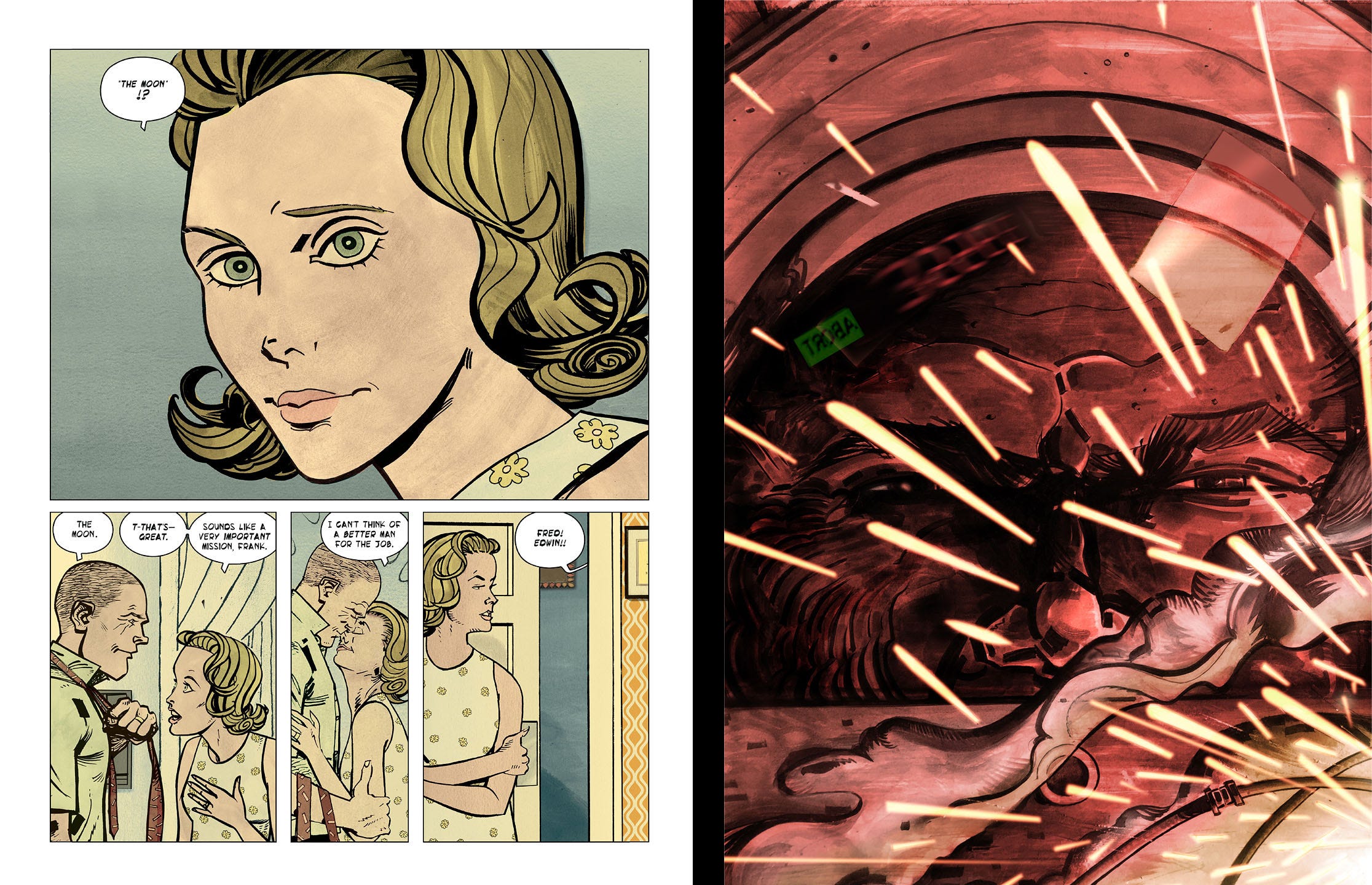
[Relating to seeing a project through]: Well, it’s been a ton of years, I have done a lot of dumb shit to see a project completed. I don’t have a method per se other than to keep my eyes on the prize. Once a goal is set I relentlessly pursue it, sometimes to my own detriment. Always been like that. Although as of late I’m not sure if that holds tru[e] since I haven’t been tested in a while. Right after the marketing failure of Thunderbolt I began adapting a book called Rocket Men, the story of the first crew mission to the moon. I greatly enjoyed reading the book and later find out its author Robert Kurson, lived in the same neighborhood as I. I met and spoke with him, and he gave me the green light to do it. Then the COVID hoax happened. Everything got flipped over its head, killing the project. After some forced time off and a number of attempts, I haven’t got a graphic novel published since.
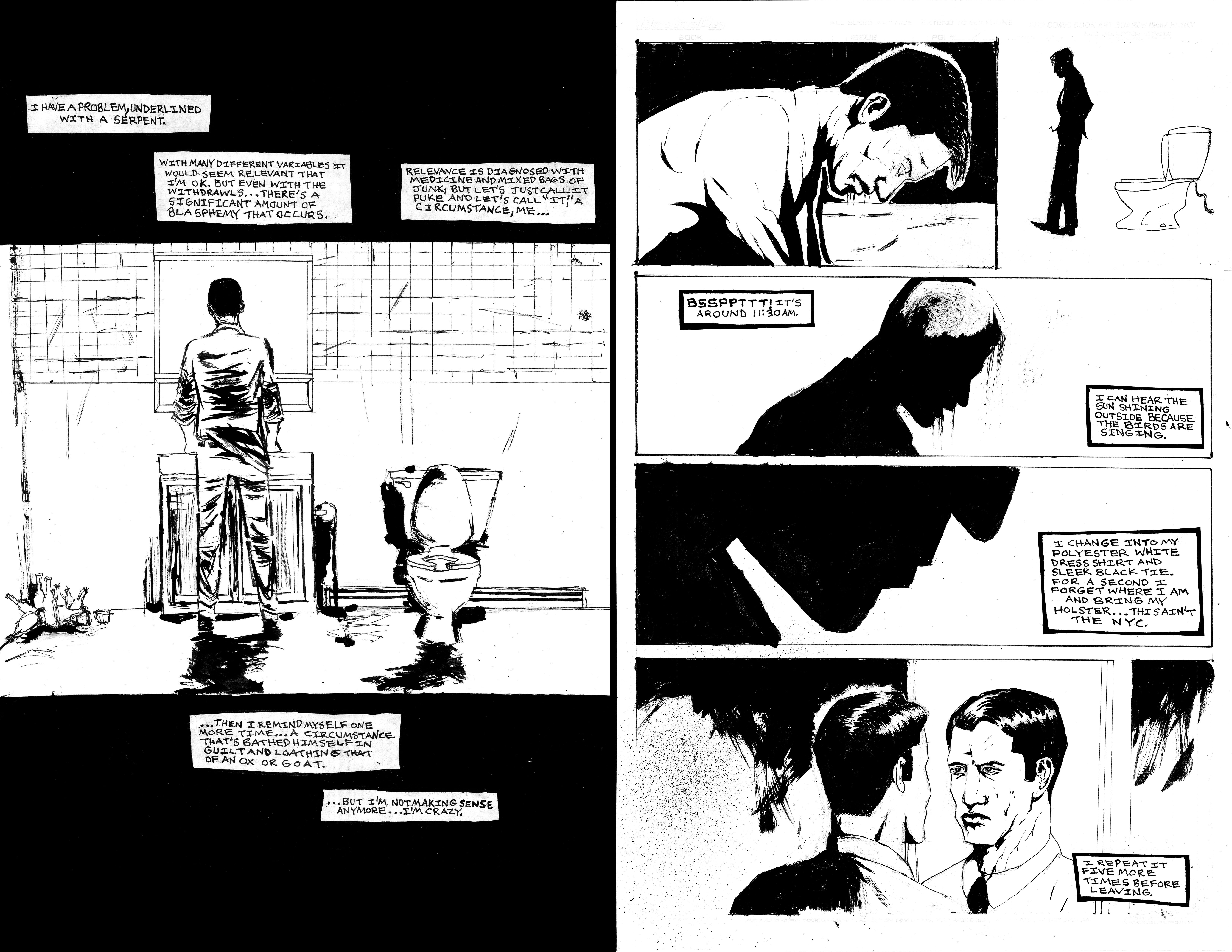
Ash H.G. [responding to Raighne’s question about how he writes and storyboards]: I’ve written a tight panel to panel and page to page script, general outline plot scripts, as well as a more stream of consciousness approach with no script or outline. The method that I found that works best for me is ensuring first, I have a story that has an end to it. Then writing an outline of the overall story. If that’s all good and I like that, then I will really dive into character designs and storyboarding/thumbnailing. I’ve approached trying to complete stories without having an ending, and working out the character designs and storyboard/thumbnails first, but most of those stories ended up not getting finished.
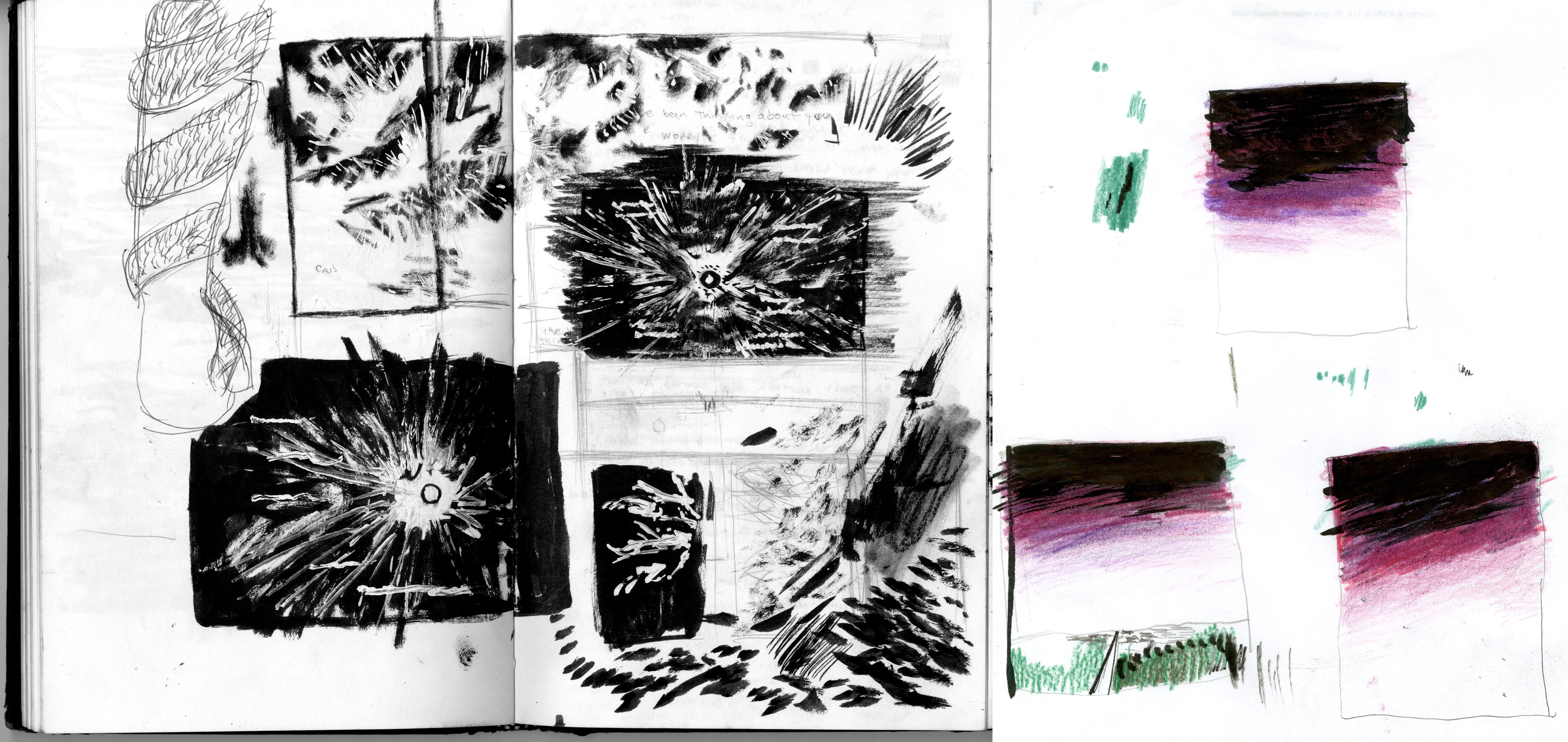
I have held a day job or multiple day jobs up to this point in my career; if feasible, I will do some thumbnailing, sketching, and character designs on my shift, and might use some of those ideas for the story. Of course when I’m off of work I put more time into fleshing out the details of the story. I come up with [some] dialogue while thumbnailing, and [more dialogue while doing other things]. then build the page layout based around the dialogue. Just depends on wh[at] pops into my head first.
AHG [responding to how to finish a project]: As far as tricks go, I’d say mentally focusing on being able to let the art go. Meaning, it’s okay if it’s not up to the standards you had in mind to a degree. If it’s not “perfect”, that’s okay. At some point it’s more important to get the work out into the world and deal with critiques and reviews later. You can always redo it or take what lessons and criticism you may have received, into the next story. Also experimenting and trying different styles that may speed up your process.
I’d also say, and this may sound cliche, but complete a story so you know what it feels like. Even if it’s just a one page comic strip, a two panel or single panel strip. Complete something. If you’re working on a comic and can’t figure out an ending to it, tag, “the end” on the very last panel and see what happens. Cut up the strip - rearrange panels - label “the end” on different panels and see what happens.
Up to this point for me, the only challenges I’ve had when it comes to completing a story is not respecting the flow of the story. If I don’t respect the tandem of the story things can fall apart. Hopefully my feedback does not sound too contradictory.
AHG: [Wilfred, ] I looked up those manga books you mentioned [earlier — The Way of the Househusband and Oishinbo]. I think it’s so incredible how they make stories on such a wide range of subject matter. I really dig that about manga. Have you ever heard of Ebisu Yoshikazu? Man, I think his work is incredible — super raw. Very curious to know what you think of his work, lol. He started making comics in the early ‘70s. Not a lot of his work has been translated I believe. But at that link the publisher Breakdown Press has published two of his books. And yes, that Crow soundtrack is classic.
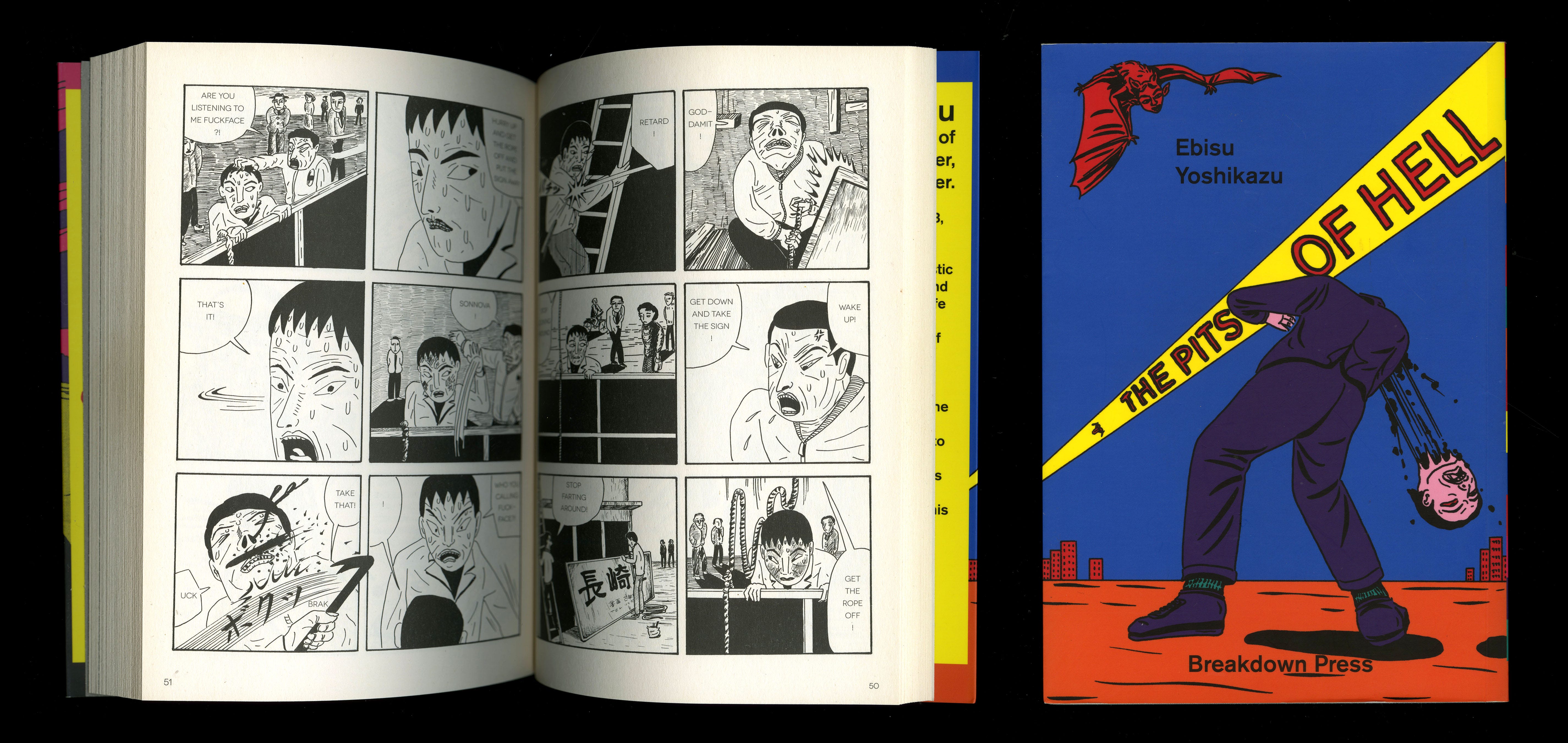
WS: I’ve not read Yoshikazu but I’m definitely familiar with his stuff. He has such a distinct style, hard to overlook. I did find The Pits of Hell on the Internet Archives, it’s going to be quite an interesting bedtime reading for me. As a creator, once I was introduce[d] to manga it was quite liberating knowing you can literally make comics about anything. Which mangakas do. I’m sure there is one out there about the joys of chewing gum.
AHG: With the Marvel and DC movies being so big now, have you experienced any sort of different treatment when you tell people you make comics? Or do you keep that on the down low?
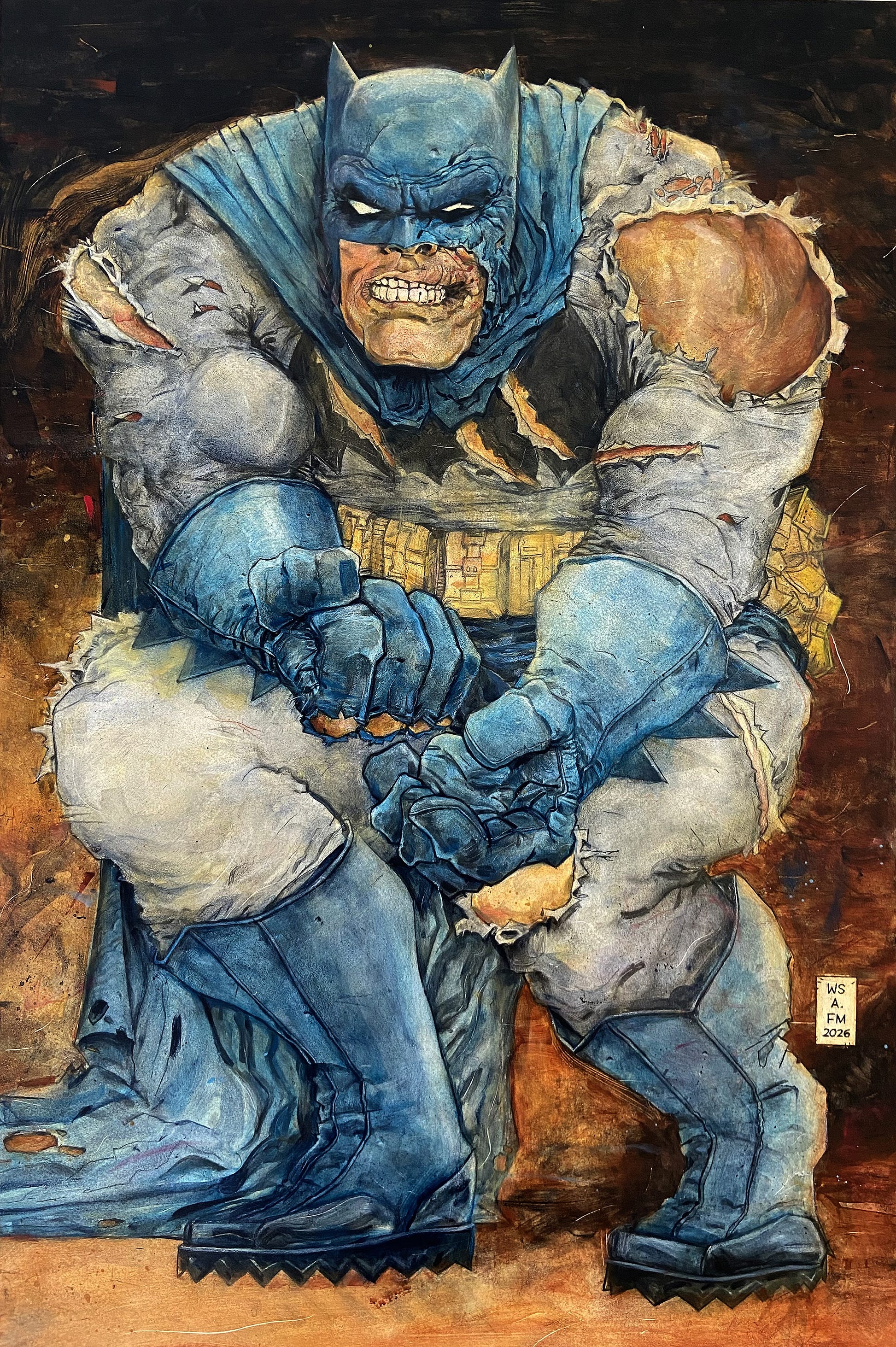
WS: You are assuming that I talk to anybody.
AHG: I am curious to know what you may be currently working on and how that is coming along?
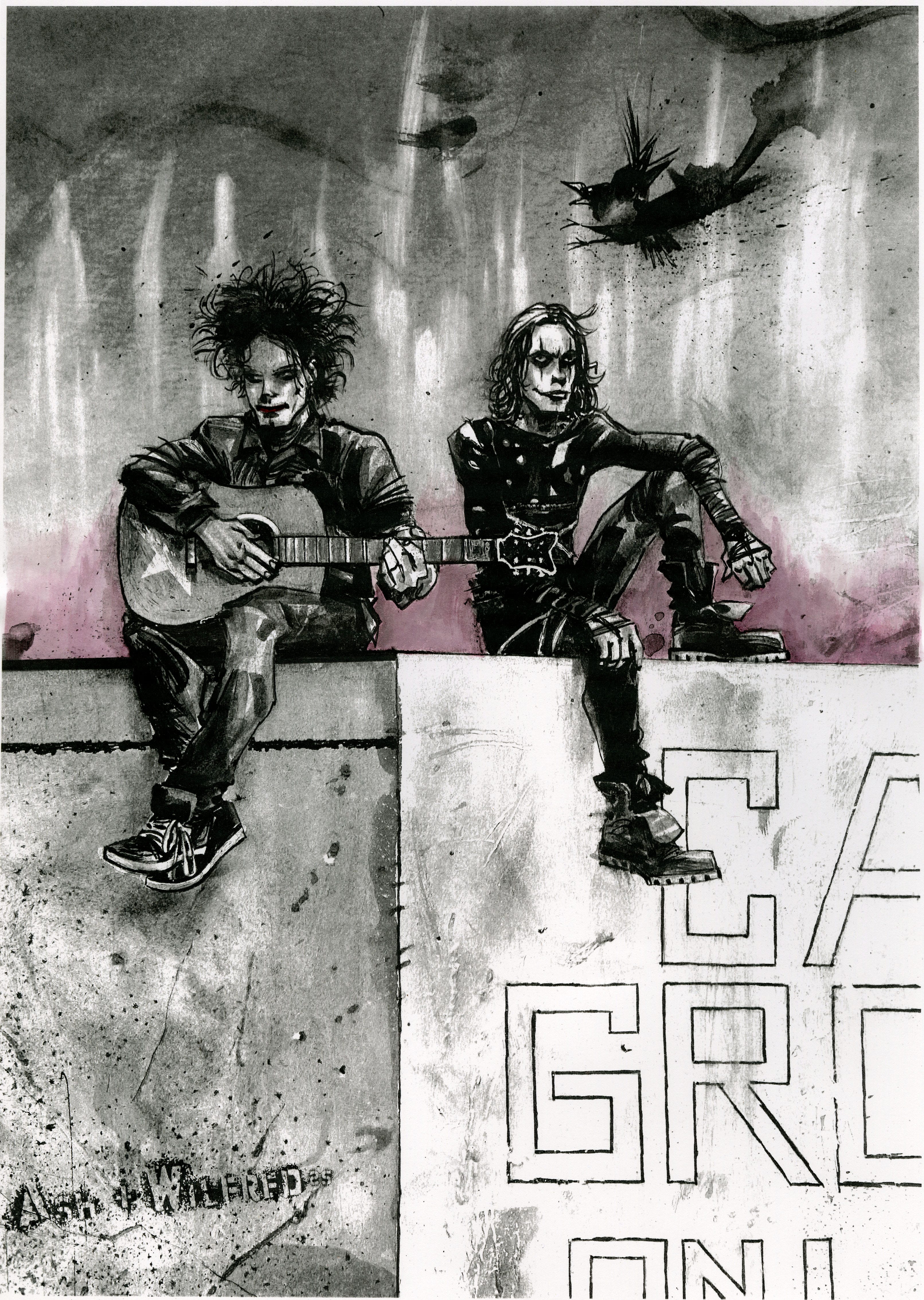
Attached is a photo of the sketch for our collab drawing, but would like to fill it in a little bit more before sending it to you (scanning).
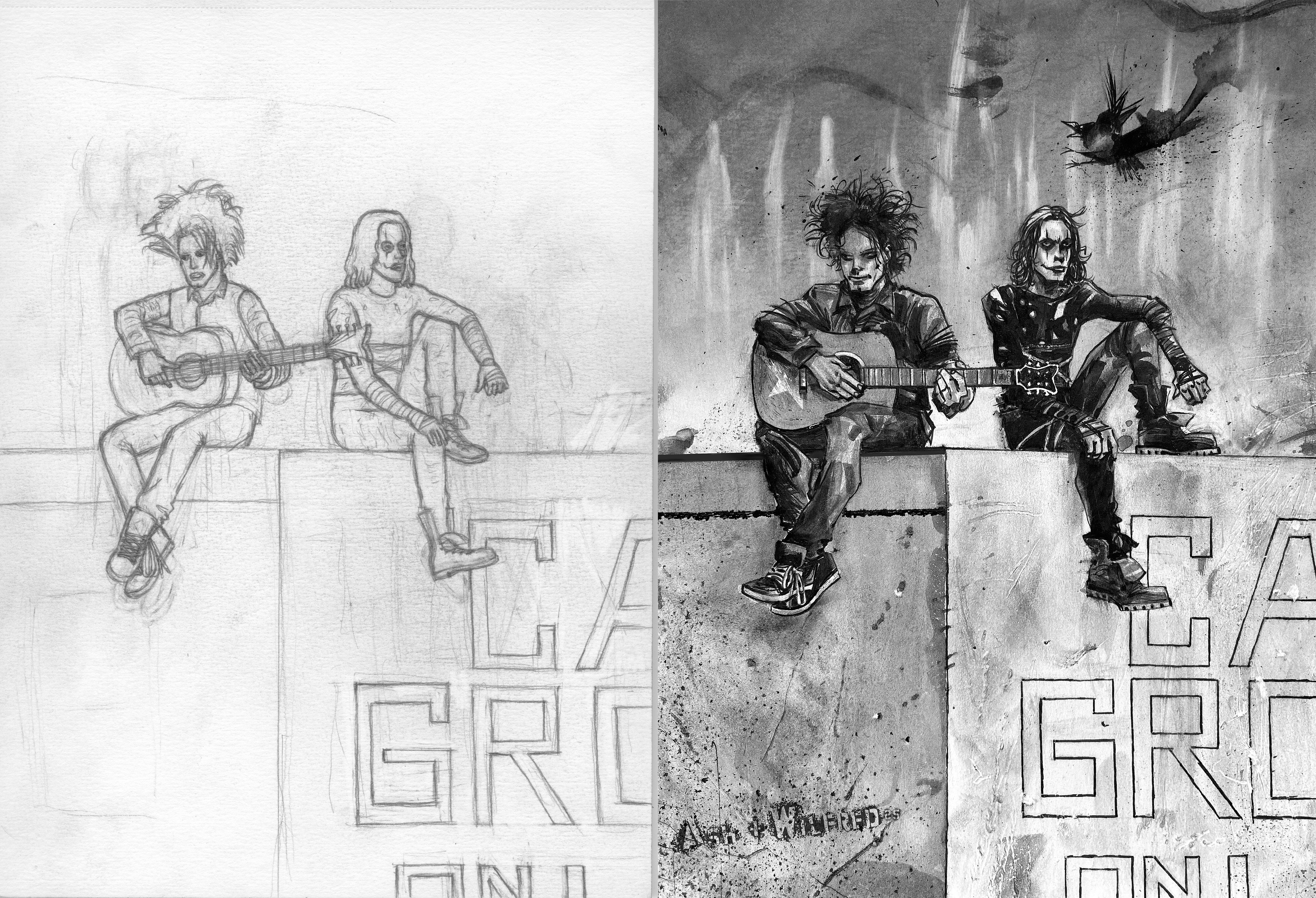
Will do my best to get the drawing to you before April 1st. Just a heads up if I don’t it’s because I’m finishing the story I’m doing for the anthology.
Hope ya dig it.
WS: Send your pencils when you [are] finished and I’ll take it from there. Looking forward to it.
Nothing big. At the moment I’m working on a short story for Mirror Mirror. Which reminds me, I’m way behind my deadline. Gotta go.
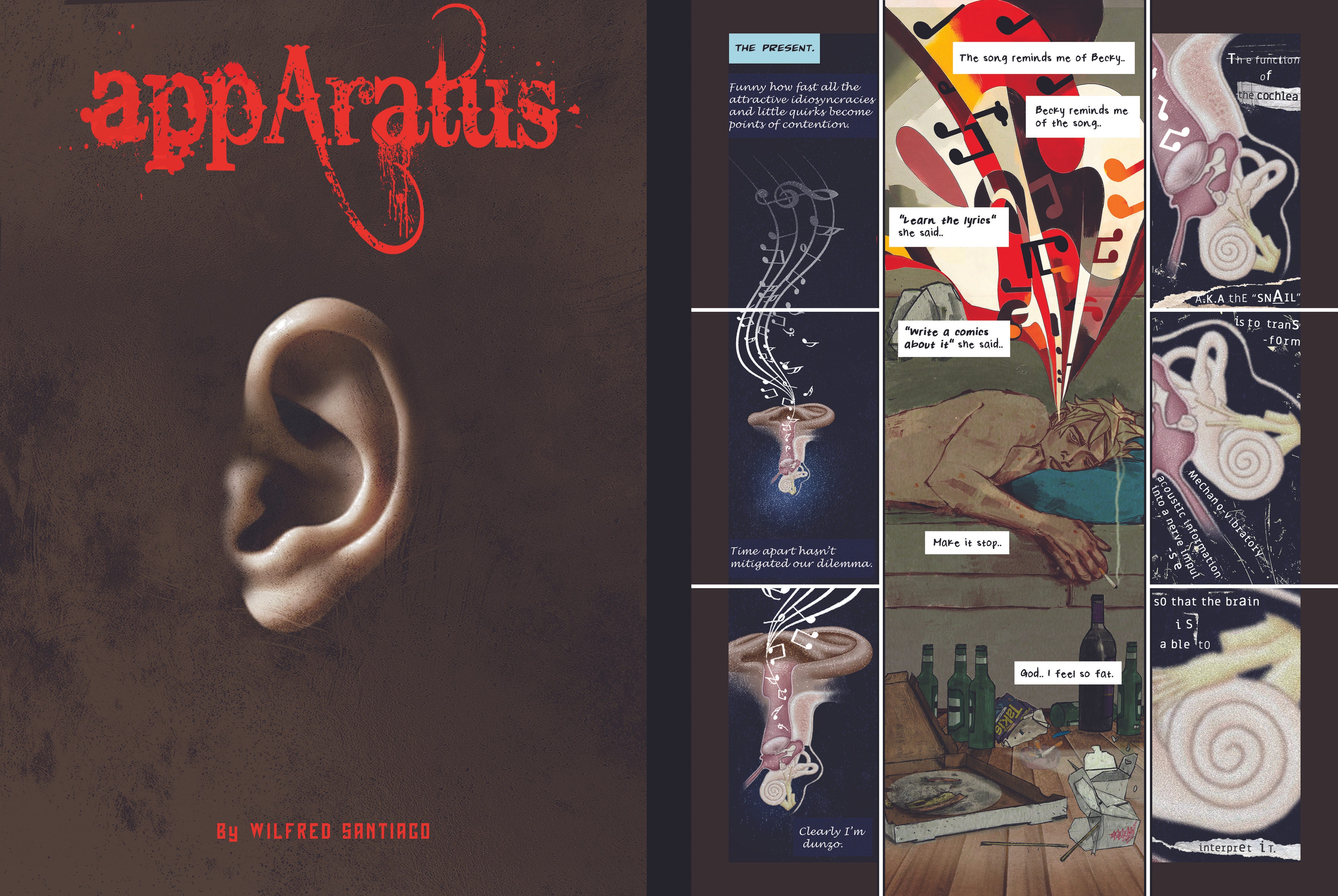
AHG: I am doing a story for Mirror Mirror as well. Will answer your question and respond in the coming days. And okay, sounds good about the pencils.
I’m on a deadline for April 1st to finish my contribution to the Mirror Mirror anthology. Been focusing on that lately.
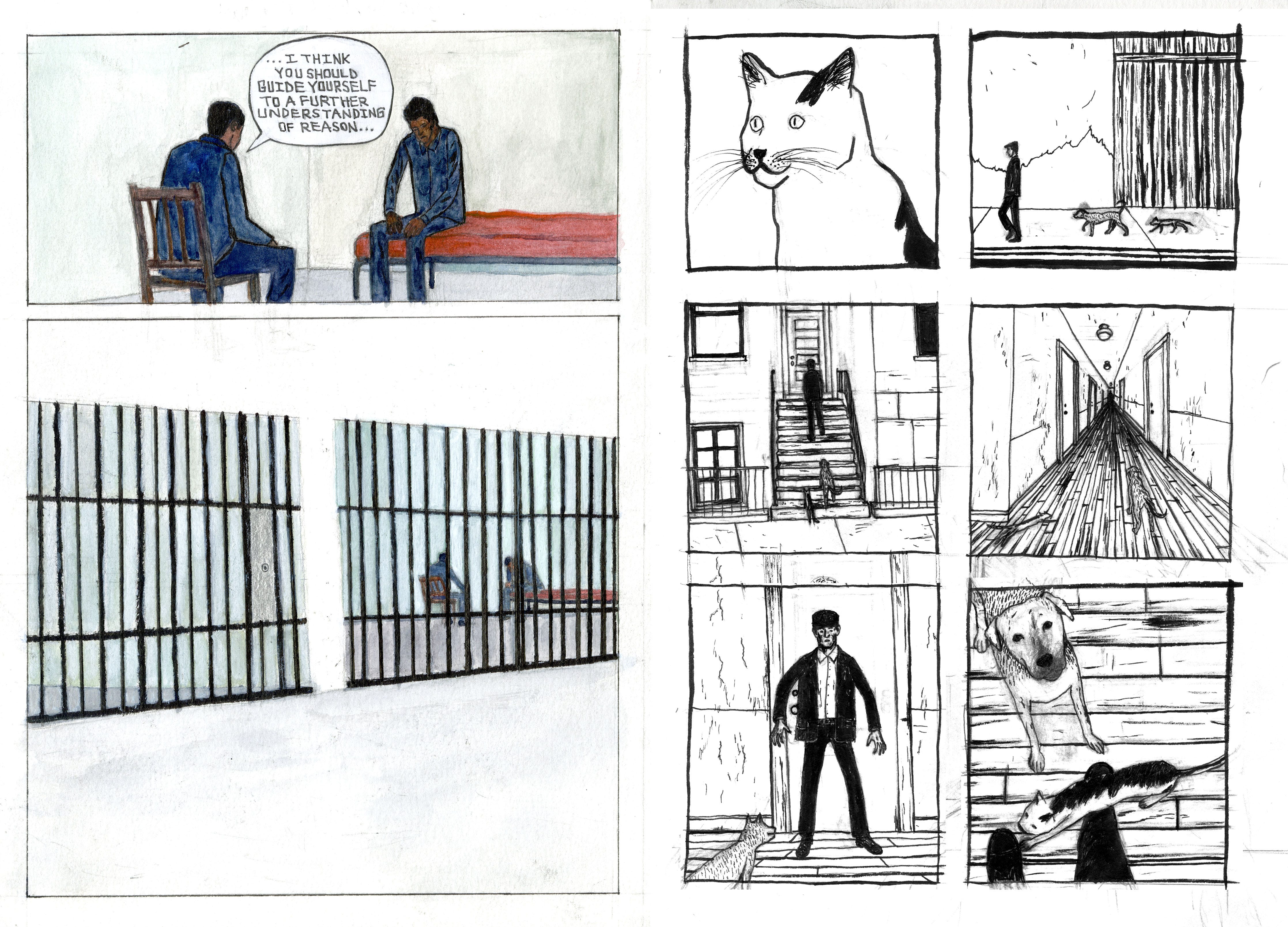
AHG: What’s on your nightstand right now?
WS: [I’m] looking forward to see[ing] your Mirror Mirror stuff. I’m late as fuck with my piece so no rush in sending the scan, although that’s gonna be fun. Are these guys on top of Cafe & Grocery on Lasko?
Without my knowledge over the weekend, my son went through my stash of comics and later told his mother that he read an “inappropriate book”. The book in question, East District. LOL.
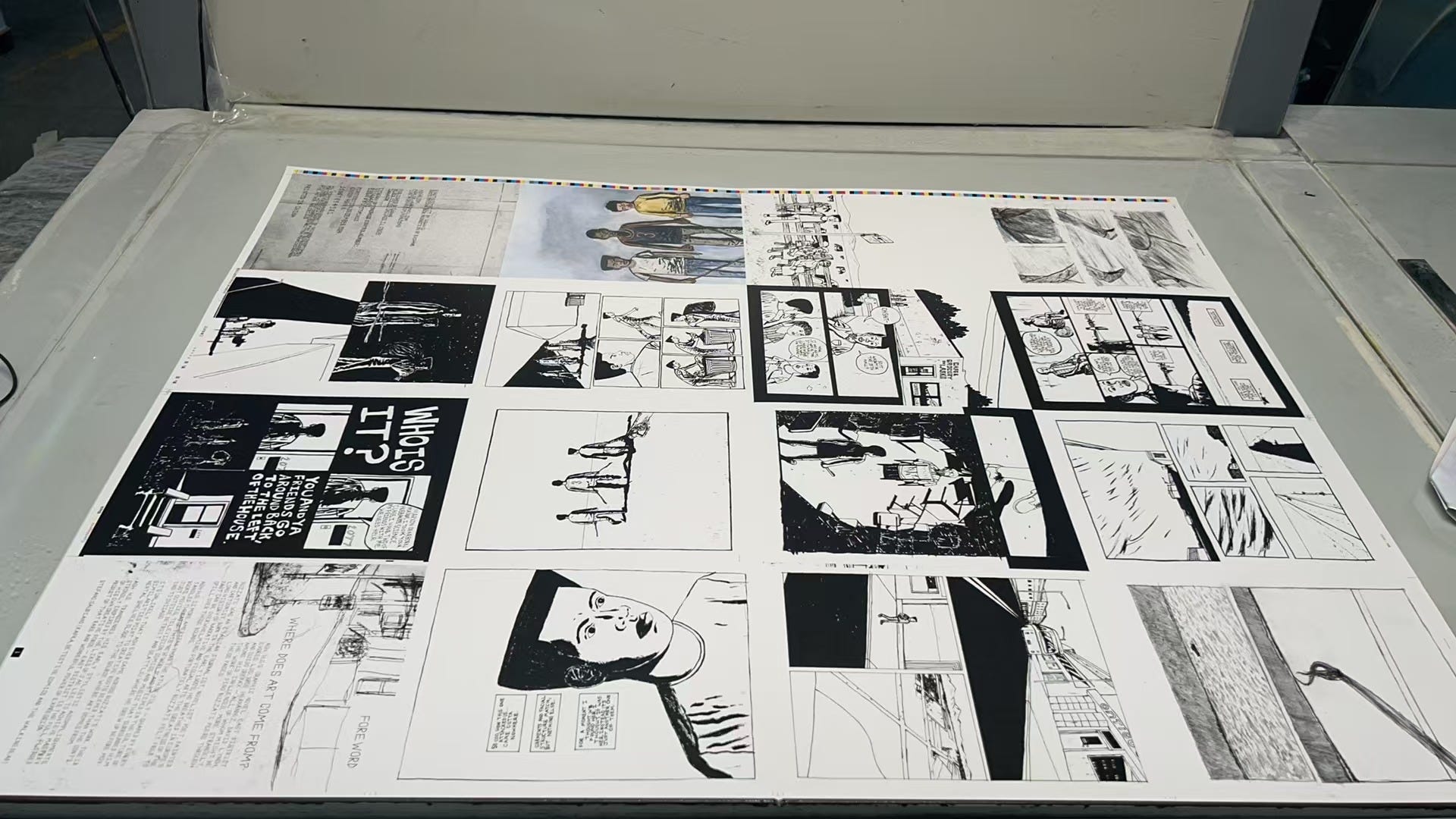
AHG: I hadn't thought of it being Cafe & Grocery on Lasko, but will make it this. Thanks for the idea! lol.
Oh boy, I guess we're both in trouble now huh, lol.
Thanks, I am looking forward to seeing your piece as well. Raighne showed some pages from it and I'm very intrigued to read the rest of it.
On my nightstand: I recently finished Philip K. Dick's Do Androids Dream of Electric Sheep? I tried reading it many years ago but at the time I wasn't able to get into it. Now I'm currently reading The Martini Shot by George Pelecanos.
What have you been reading lately?
WS: Calvin and Hobbes.
AHG: Previously you mentioned it can be challenging to sell a story/book, what do you think it is about comics that keeps you coming back to it? You have this amazing skillset to be able to do commercial work and also more alternative type work, and even being able to blend the two together. Did you teach yourself photoshop and how to work digitally for aspects of your work, or took some classes also?
“You are assuming that I talk to anybody”—lol, that's fair. If that's the case, what's a usual work day like when you are working on a project?
WS: When selling a book a lot of publishers won’t give you the time of day unless you have an agent. I had an agent a while ago but he was an absolute abject failure so I dropped him, which limits the number of potential publishers. Comics is like making little movies but a lot cheaper, where you’re the writer, the director, set designer, etc. so whatever message you’re trying to convey or explore is minimally distilled. In a movie there’s so many obstacles, dealing with hundreds of people, plus cost. Speaking of movies, when I worked on my graphic novel THUNDERBOLT: An American Tale, I hoped to turn it into an animated movie. I even did an original score. If you’re interested or need some background noise, you can listen to it at: www.goodwilfred.com/ost
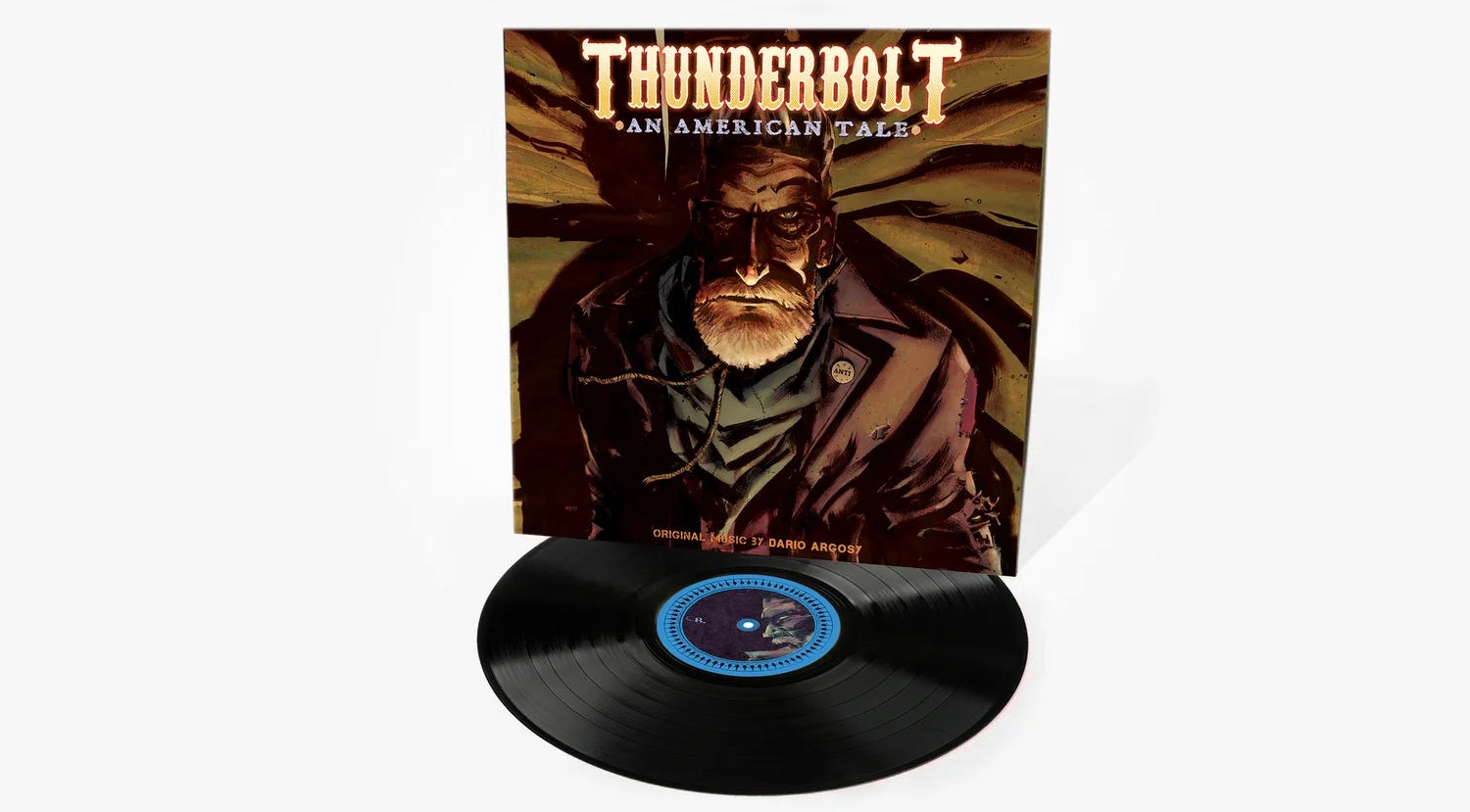
Unfortunately, it never worked out. No one even read the damn book because the scummy “publisher” couldn’t even get it to the comics stores. So it was DOA. It was an enormous amount of work, and it took me years to morally recuperate and start doing comics again. I can send you a copy of the book if you like. I got hundreds of [them]. I could literally do a comic book on the walls with zero money if I have to. That’s the beauty of it. My approach to comics is very old school, I start with a pencil on paper, I don’t have a tablet or any of that. The photoshop program I use is the same I started using in the late 90s, mostly for practical reasons. The fuck I’m going to pay a subscription to Adobe to use my shit. I’m self-taught. Everything I’ve learned is through trial and error.
So what is it about comics that keeps me coming back? That I can.
Let’s see...I get up around 2:30 am, make coffee, fix my son’s lunch and prep ahead for dinner. We all love to eat, and I love to cook, so I spend a lot of time in the kitchen. Then drop the kid at school, come back home and have a cider, check email, do business-related stuff. Have brunch while reading the news, curse, then do art stuff— I’m currently working on a submission for a new graphic novel. Do more house chores. Groom, curse, think about doing exercise, have a couple of bourbon shots, do more art stuff, pick up the boy at school, cook dinner, have another drink, spend time with the family, watch a movie, laugh, curse, doom scroll, masturbate, cry, pass out. Rinse and repeat. Something like that.
AHG: In response to your answers and concluding the interview, man I can relate to the last sentence of the routine you speak of. I don't have any children myself though. For my current day job I have to get up early, so it makes working late challenging Sunday through Thursday. Later this week [week 3 of May] I start classes for a data analytics certification, in the hopes that it will lead to a better paying day job, and better working hours; at least hours that I prefer and don't mind working. Within the past couple of years I have had some major health challenges, so that's made life that much more interesting for me.
I already have a copy of THUNDERBOLT: An American Tale. You can send a copy for Raighne though if you'd like. And thank you for offering. It's a really beautiful book and I'm always impressed whenever I view /read it. Your work has always given me the spark of, "oh shit, I gotta step my game up" feeling.
I most certainly will listen to the rest of the THUNDERBOLT soundtrack. I started listening to it while typing this and dig it.
Thank you for being so honest about explaining your routine and challenges you've encountered on the business side of things. I'm looking forward to seeing what comes of this new graphic novel submission you are working on, and also reading your story that will be in the new Mirror Mirror. Raighne showed me some pages of it, and I can't wait to read the entire story.
I think the transparency in the last sentence sounds like a good way to conclude the interview. And again, I can relate to that so much. To the point that I really appreciate you sharing that and releasing that out into the world. Thanks for your time Wilfred. Have a blessed rest of the year.
On a side note, working on the colors for the piece. Should be done this week or early next week.
Best wishes with everything that lies ahead.